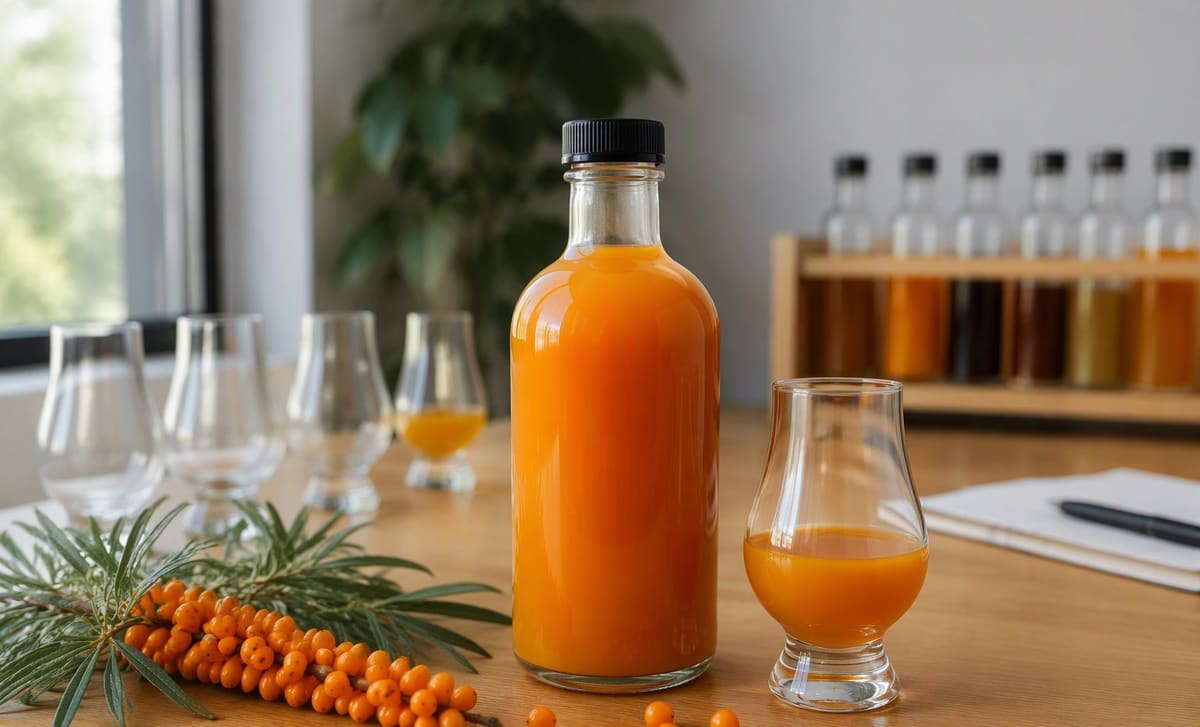
WellWith is Ayuzera’s sea buckthorn line, a range of 300 ml Ladakh-pulp juices sold as Ayuzera WellWith or WellWith by Ayuzera. The label detail is genuinely good for the Indian market: a stated 99.9% Hippophae rhamnoides pulp on the plain bottle, an FSSAI number, and printed dates. The catches are the price, premium for a juice, and the format, since juice is a vitamin C food and not the concentrated oil the trials used. It scores 6.5 in our rubric.
Research-based review per our editorial policy. We scored the published labels and listings, not a lab result or a hands-on test, because we have run neither on this line.
The scorecard
| Criterion | Weight | WellWith result | Score |
|---|---|---|---|
| Purity and sourcing | 30% | Ladakh pulp claim, 99.9% Hippophae rhamnoides on the plain bottle | 7.0 |
| Fatty acid profile | 25% | A juice, not oil; carries little of the studied fatty acids | 6.0 |
| Third-party testing | 20% | FSSAI licence shown, no independent assays found | 6.0 |
| Value | 15% | Around ₹765 for 300 ml runs premium for a juice | 6.0 |
| Transparency | 10% | Published percentages, FSSAI number, and dates, better than most | 7.5 |
One brand, two names
Clearing this up first saves confusion. Ayuzera is the brand, WellWith is its sea buckthorn range, and the listings mix the order freely, Ayuzera WellWith one place and WellWith by Ayuzera the next. So are they two brands or one? One. On the pack, the juice is marketed by Winzera Pvt. Ltd. and manufactured by Sage Herbals Pvt. Ltd. We treat “wellwith sea buckthorn” and “ayuzera sea buckthorn” as the same product line, because that’s what they are, and we’re not going to review one product twice and cannibalise our own answer.
What we verified
- The plain product: a 300 ml sea buckthorn pulp concentrate, listing sea buckthorn pulp (Hippophae rhamnoides) at 99.9% plus a preservative (INS 202), with a Ladakh origin claim.
- The label discipline: an FSSAI licence number, a manufacturer address, and printed manufacturing and expiry dates, which is more than most Indian sellers publish.
- The price: an MRP of ₹849, selling near ₹765, on Indian pharmacy listings in August 2026.
- The listings: legible label images across the brand’s own site and multiple independent marketplaces, which is how we could read the panel at all.
- What we could not verify: any independent lab assay, a fatty acid breakdown, and a consistent story on who makes and markets it, since sources name different companies.
The variant maze
Most of the range is not plain pulp. WellWith splits into targeted blends that dilute the sea buckthorn with Ayurvedic herbs, and the pulp percentage falls as the promises pile up.
| Variant | Sea buckthorn pulp | What else is in it |
|---|---|---|
| Plain concentrate | 99.9% | Just a preservative |
| With Turmeric Oil | about 95% | CO2-extracted turmeric oil |
| Fitwell (weight) | about 85.5% | Garcinia, Guggul, Punarnava, Kokum |
| Femwin (women) | about 75.5% | Shatavari, Ashok, Fenugreek, Ashwagandha and more |
| Power-X (men) | roughly a quarter | Konch Beej, Safed Musli, Gokhru, Ashwagandha and more |
That’s the honest read. So which bottle actually gives you the most sea buckthorn? The plain one. The herb blends are a different product wearing the same label, and none of the added herbs changes what the sea buckthorn evidence says.
The format question, plainly
WellWith is juice, or pulp concentrate, which is the same story our juice explainer tells about every bottle in the category. Juice is a tart, vitamin C rich food. But is a juice the same as the oil the studies dosed? It isn’t, and that’s the whole catch. The studied benefits, the better blood lipids and the rest, came from 1 to 3 g of concentrated oil a day, and juice carries little of that oil. So a WellWith bottle is a pleasant daily drink with a real origin story. It’s not a substitute for the oil, and the 25% weight on fatty acid profile is where that shows up as a 6.0. There’s a capsule form too, if you search wellwith sea buckthorn capsules, and the same dose math from the capsules guide applies to it.
Where WellWith earns its 6.5
Transparency, mostly. For the Indian market this is a well-documented label: the pulp percentage is printed, the FSSAI number is there, and the pack carries real manufacturing and expiry dates. That beats the sparse panels we found on Biosash, and it is why transparency scores 7.5 here while third-party testing still sits at 6.0, because a licence number is not the same as a published assay.
Where it falls short
Two places. Price, because around ₹765 for 300 ml is premium against the mainstream juices in the India buying guide, some of which sell 500 ml for less. And proof, because the FSSAI licence tells you the business is registered, not that anyone independent has tested the contents. The cross-source muddle over which company makes and markets the line doesn’t help confidence either.
The cost-per-day question
At a common 30 ml daily serving, a 300 ml bottle is ten days, so the plain concentrate runs about ₹76 a day at the street price and ₹85 at MRP. That’s a food cost for a vitamin C drink, and it’s a steep one. The cost-per-day tool will run your actual serving, and the honest framing stays the same: you’re paying a premium price for a juice, so buy it for the drink, not for the studied benefits.
How it compares
Against Biosash, WellWith wins on published label detail and loses nothing obvious on origin, since both lean on Ladakh pulp. Against Leh Berry, the older Ladakh name, WellWith is pricier and more heavily formulated with add-in herbs. Against Patanjali, it is a juice versus a capsule, and it prints far more on the panel. All of these reach shoppers under India’s tangle of names for one fruit, from Leh berry to the borrowed sea buckthorn, and the sea buckthorn in Hindi and Indian names page sorts out which is which. The 6.5 places it above the thinnest Indian sellers and below the documented oils on the brands ranking.
One safety note for the herb blends especially. Sea buckthorn has a mild antiplatelet signal at high oil doses, and several of the added Ayurvedic herbs have their own cautions in pregnancy and with medication. If you are pregnant or on any prescription, read the safety hub and ask a doctor before a daily blend.
What would raise or lower the score
Raise it: a published third-party assay, a fatty acid breakdown, and one consistent statement of who makes and markets the line. Any of those would lift the 6.0 on testing. Lower it: a thinner label on a future batch, or a price rise on an already premium juice.
What to verify before you buy
Pick the plain concentrate if you want sea buckthorn rather than a herb blend, and read the current pulp percentage, because the variants vary widely. Check the FSSAI number and the expiry date on the actual pack. Then run the price per 100 ml against the cheaper mainstream juices before you commit, and treat the bottle as the vitamin C food it is.
Frequently asked questions
Are WellWith and Ayuzera the same thing?
Effectively yes. Ayuzera is the brand, and WellWith is its sea buckthorn line, which is why listings read Ayuzera WellWith or WellWith by Ayuzera. The juices are marketed by Winzera Pvt. Ltd. and manufactured by Sage Herbals Pvt. Ltd., so we review them as one line.
What is in WellWith sea buckthorn juice?
The plain concentrate lists sea buckthorn pulp (Hippophae rhamnoides) at 99.9% with a preservative, and carries an FSSAI number and manufacturing and expiry dates. The targeted variants dilute that pulp with named Ayurvedic herbs, so Fitwell drops to about 85.5% pulp and Power-X far lower.
What does WellWith sea buckthorn cost?
The 300 ml pulp concentrate listed at an MRP of ₹849, selling near ₹765, on Indian pharmacy sites in August 2026. That is premium for a juice, and it is a juice, so it is a tart vitamin C food rather than the concentrated oil the studies dosed. It scores 6.5 in our rubric.