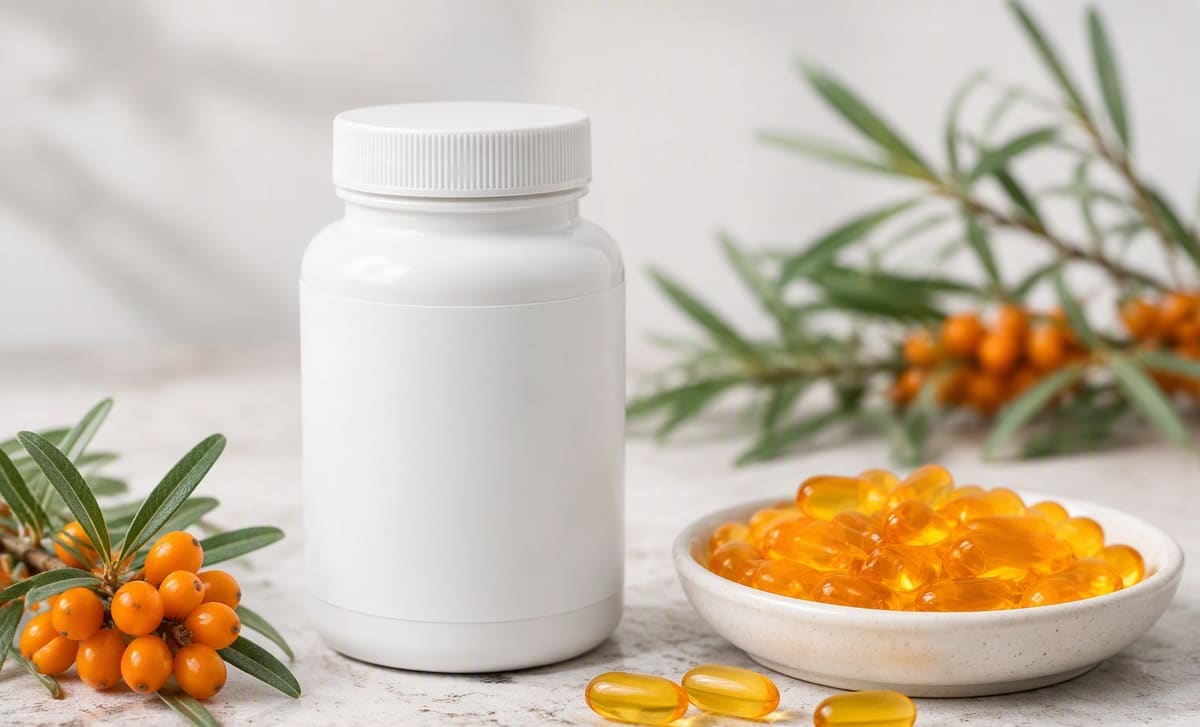
NOW Foods is the value buyer’s safest mainstream bet: a large US supplement maker that publicizes its in-house lab testing, a real differentiator at this price point, selling sea buckthorn softgels at commodity prices. It scores 7.6 in our rubric, the best of the mainstream value tier.
Research-based review per our editorial policy. We scored the sea buckthorn softgel line, not the company’s full catalog.
The scorecard
| Criterion | Weight | NOW Foods result | Score |
|---|---|---|---|
| Purity and sourcing | 30% | Commodity sourcing at scale | 7.0 |
| Fatty acid profile | 25% | Softgel line; dose per softgel needs label math | 7.5 |
| Third-party testing | 20% | In-house labs publicized, rare at this price | 8.5 |
| Value | 15% | Value pricing; check current price | 8.0 |
| Transparency | 10% | Solid panels, less sea-buckthorn-specific detail | 7.0 |
In-house labs are why NOW clears 7.6 while the other commodity names among the sellers we have scored sit lower. Testing you can point to beats sourcing you cannot.
What we verified
- The company: a large, value-priced US supplement maker with a long-standing mainstream presence.
- The labs: NOW publicizes its in-house testing infrastructure, which is a genuine differentiator at this price, where many rivals offer none.
- The line: sea buckthorn softgels in the commodity tier, positioned on price and availability rather than origin storytelling.
The products in the line
- Sea buckthorn softgels: the budget-reliable capsule. Check the dose per softgel and do the math against the studied amounts in the capsules guide, since value bottles sometimes need more capsules per day than the front label suggests.
Where NOW Foods falls short
Origin and specificity. You get commodity sourcing without the named-region paperwork of the Himalayan specialists, and the sea-buckthorn-specific label detail (plant part, omega-7 percentage) is thinner than the leaders. At this price, those are expected trade-offs, not hidden ones.
Who should buy NOW Foods
Value buyers who want lab-backed quality assurance without specialist prices, and anyone topping up a household supplement order. Buyers chasing the documented omega-7 numbers should compare against the brands ranking first.
One safety note: sea buckthorn oil showed a mild antiplatelet signal at high doses in one small study, and concentrated supplements are unstudied in pregnancy. If you take blood thinners or are pregnant, read the safety hub first.
The label, line by line
The panels are solid in the regulatory sense: clear serving sizes, consistent formats, the competence of a company that has printed supplement facts for decades. The sea-buckthorn-specific layer is thinner. Plant part and omega-7 percentage are not the front-and-center numbers they are at the specialists, and that is why transparency scores 7.0 while third-party testing scores 8.5. The publicized in-house labs are the real story. At commodity prices, many rivals offer no testing infrastructure to check at all. NOW at least shows its machinery. What it does not show is origin paperwork, and the rubric scores those separately.
The cost-per-day question
The sticker price is the attraction, and value scores 8.0 for it. The caution is dose. Value bottles sometimes need more capsules per day than the front label suggests, so compute cost per studied day rather than cost per bottle. The verified anchor is $0.75 a day for SeabuckWonders at 2 softgels with printed percentages. If NOW’s label math lands near that, the lab backing makes it the better mainstream buy. If it takes twice the capsules to get there, the savings are smaller than the shelf tag promises. Also check the bottle count, since big-count bottles are where this brand’s unit pricing is strongest. The study dosages page gives the target numbers.
How it compares
Against Nature’s Way at 7.4, NOW wins on the publicized lab story at similar prices. Against Swanson at 7.0, it wins on documentation at a slightly higher price. Against the specialists, it loses on origin and printed percentages. That is exactly what 7.6 means here: the top of the mainstream tier, not a rival to the top two. For a household that buys supplements in bulk across many categories, staying inside one mainstream brand has a real convenience value our rubric does not capture. The Nature’s Way review is the closest sibling, and the two-tenths gap is the labs.
What would raise or lower the score
Raise it: named-region sourcing or a printed omega-7 percentage on the sea buckthorn panel. Either would push this brand toward the specialist conversation. Lower it: quieter labs. The testing score carries this brand, and if the publicized testing program thinned out, the whole case drops a tier.
Who should skip NOW Foods
Origin-driven buyers and dose matchers who want printed percentages. If the story of where the berries grew matters to you, commodity sourcing offers no story. If you are matching a trial dose to the milligram, you need a panel that prints omega-7 numbers, and this one does not. For everyone else, particularly households already ordering from NOW, it is the rare budget pick with a real testing backbone.
What to verify before you buy
Read the dose per softgel, count the capsules a studied day requires, and compute the real daily cost against the $0.75 anchor. Confirm the in-house testing program is still publicized on the current site. If both hold, this is the value tier’s safest mainstream bet, which is exactly what we scored it.
The house-brand effect
NOW’s real rival is not SeabuckWonders. It is the decision to add one more item to an existing NOW order. In that context the lab backing at commodity pricing is a genuinely strong offer, and it is the context most of this brand’s buyers are actually in.
Frequently asked questions
Is NOW Foods sea buckthorn worth it?
Yes for value buyers. NOW Foods pairs value pricing with publicized in-house lab testing, a genuine differentiator at this price point, and wide availability. The trade-offs are commodity sourcing and softgels whose dose needs label math against the studied amounts. It scores 7.6 in our rubric.
Does NOW Foods test its sea buckthorn?
NOW publicizes its in-house lab testing infrastructure, which is a genuine differentiator at commodity prices and a large part of why it tops our mainstream tier at 7.6. What it does not publish are sea-buckthorn-specific assays or origin paperwork.