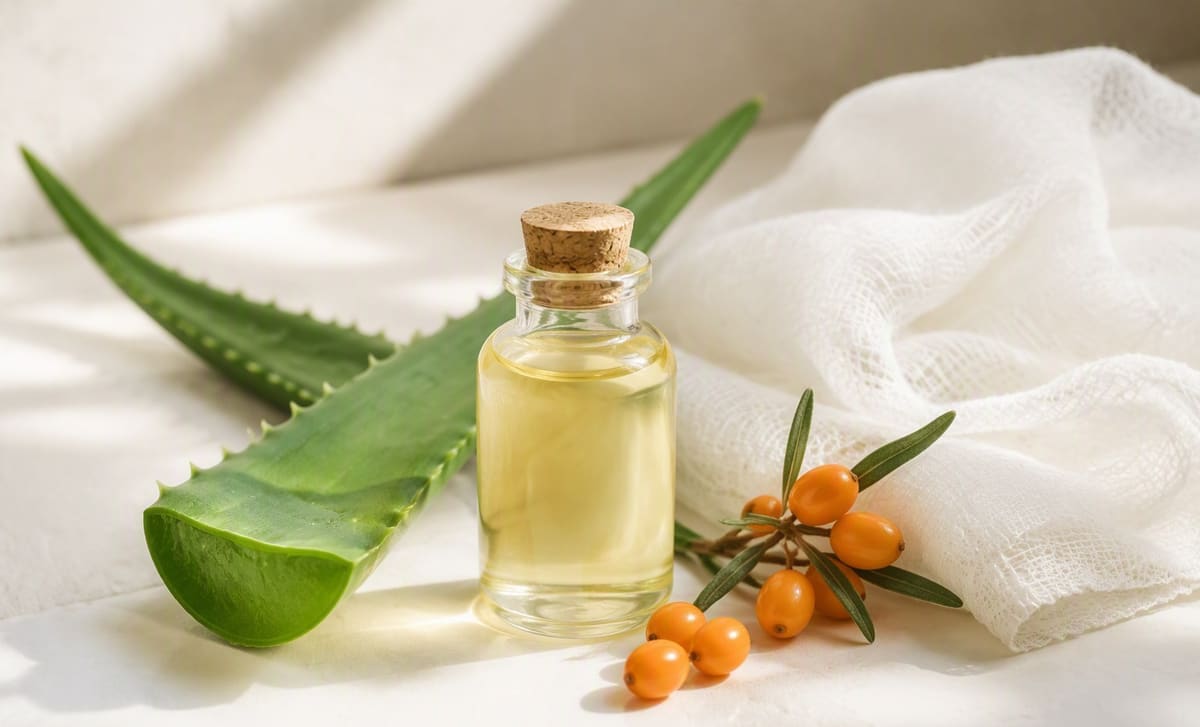
Our evidence file verifies no wound-healing trial for sea buckthorn, so this page makes no healing claim. For minor kitchen burns and sunburn, the oil has a narrow comfort role after proper first aid and only on intact skin. Open, deep, or infected wounds are medical territory, and oil does not belong in them.
What our evidence file actually holds
Nothing verified. One burn-wound trial from 2014 sits in our verification queue, meaning we have not confirmed the original paper and do not count it. Until that changes, every wound-healing claim for sea buckthorn on the internet outruns the evidence we can stand behind. The plant’s fatty acids and carotenoids are real chemistry. Real chemistry is not a clinical result.
Worth saying why we are this strict: wound care is where bad advice does real harm. A moisturizer claim that overreaches costs you money. A wound claim that overreaches can cost you an infection. The bar for “verified” rises with the stakes, and open skin is the highest-stakes topic on the skin hub.
How healing actually works
Skin repairs itself in overlapping stages: first the clot-and-inflame phase, then the rebuild phase where new tissue and vessels fill in, then a long remodeling phase that can run a year, itch included. Oil has no role in the first two, when the area is open, weeping, or fragile. The one place an emollient fits is late: closed, intact skin that is dry, tight, and itchy as it remodels. That is the entire honest claim.
The rules that keep this safe
- Fresh burn: cool water, not oil. Run cool water over a minor burn for 10 to 20 minutes. Oil on a fresh burn seals heat in and makes it worse.
- Intact skin only. No oil on broken blisters, open wounds, or weeping skin. Broken skin needs medical-grade care, not cosmetic-grade oil.
- Infection is a red line. Spreading redness, pus, fever, or a wound that stops improving needs a doctor the same day.
- Deep or large burns are always a doctor, immediately.
Kitchen burn first aid, in order
- Cool running water for 10 to 20 minutes. Not ice, which damages skin.
- Remove rings and tight items near the area before swelling starts.
- Cover loosely with a clean, non-fluffy dressing or cling film laid over, not wrapped tight.
- No butter, no toothpaste, no oil, no home remedies on the fresh burn.
- Blisters stay unpopped. They are the body’s sterile dressing.
Sunburn, the burn everyone actually has
Sunburn follows the same physics. Cool showers, aloe or a plain fragrance-free moisturizer, fluids, and time. Do not oil skin that still feels hot, and never oil blistered or peeling-open areas. Once the burn has settled, the peeling has finished, and the new skin is closed and merely dry, a few drops of seed oil on damp skin is a reasonable comfort step. The sun damage page covers prevention, which beats every recovery protocol ever written.
The narrow comfort role
Once a minor burn or sunburn is cooled, closed, and past the angry stage, skin is dry and tight while it repairs. A few drops of seed oil pressed on damp skin works as a simple emollient here, easing the papery feel the way any bland oil would. Berry oil does the same job with orange staining as a bonus, which is why seed oil is the pick. Patch test first, because sun-stressed skin is reactive skin. Rancid or cut oil is a worse guest on repairing skin than on healthy skin, so the color, smell, and label checks that catch a bad bottle are worth the minute they take. “Intact” here means no cracks, no open blisters, no weeping, and no scab edges lifting.
Once a healed area is fully calm, the question usually turns to the mark it left, and the scars and stretch marks page picks up from there.
What healing skin wants
Healing skin wants boring things: moisture, rest, sun protection, and time. Drink enough water in the repair days, because burns pull fluid toward the skin and hydration supports the whole process. Keep new skin out of direct sun or under SPF once it is intact, since fresh skin pigments easily and a healed burn that tans keeps its reminder. And let the calendar work: most minor burns settle in days to a couple of weeks, and the worst thing you can add to that timeline is impatience.
Common mistakes
- Oil on a fresh burn. Seals heat in. Cool water first, always.
- Popping blisters. Each popped blister is an open door for infection.
- Treating size casually. Burns larger than your palm, burns on the face, hands, or joints, and any chemical or electrical burn are clinic business, same day.
What has actual evidence behind it
For minor burns: cool running water, clean dressings, and aloe or plain petroleum for comfort. For anything beyond that, modern wound care in a clinic. For the skin claims sea buckthorn can genuinely stand behind, the dry skin page shows the measured hydration lane, and the acne page covers the same honest-limits logic for breakouts.
Frequently asked questions
Can I put sea buckthorn oil on a burn?
On a minor kitchen burn or sunburn, after cool water first aid and once skin is intact and calm, a few drops can act as a soothing emollient. Never put oil on a fresh burn (it seals in heat) or on broken, blistered, or weeping skin. Anything deep, large, or infected is a doctor, not an oil.
Does sea buckthorn heal wounds faster?
Our evidence file verifies no wound-healing trial for sea buckthorn. One 2014 burn study sits in our verification queue, unconfirmed, so we do not count it. The honest claim ends at emollient comfort for intact skin.
Seed oil or berry oil on healing skin?
Seed oil, on intact skin only. It is pale, light, and free of the berry oil's pigment, which stains healing skin and the fabric around it. Press a few drops onto damp skin once the area is closed and calm, after a patch test, because healing skin is reactive skin. Anything open, deep, or infected is a doctor, not an oil.