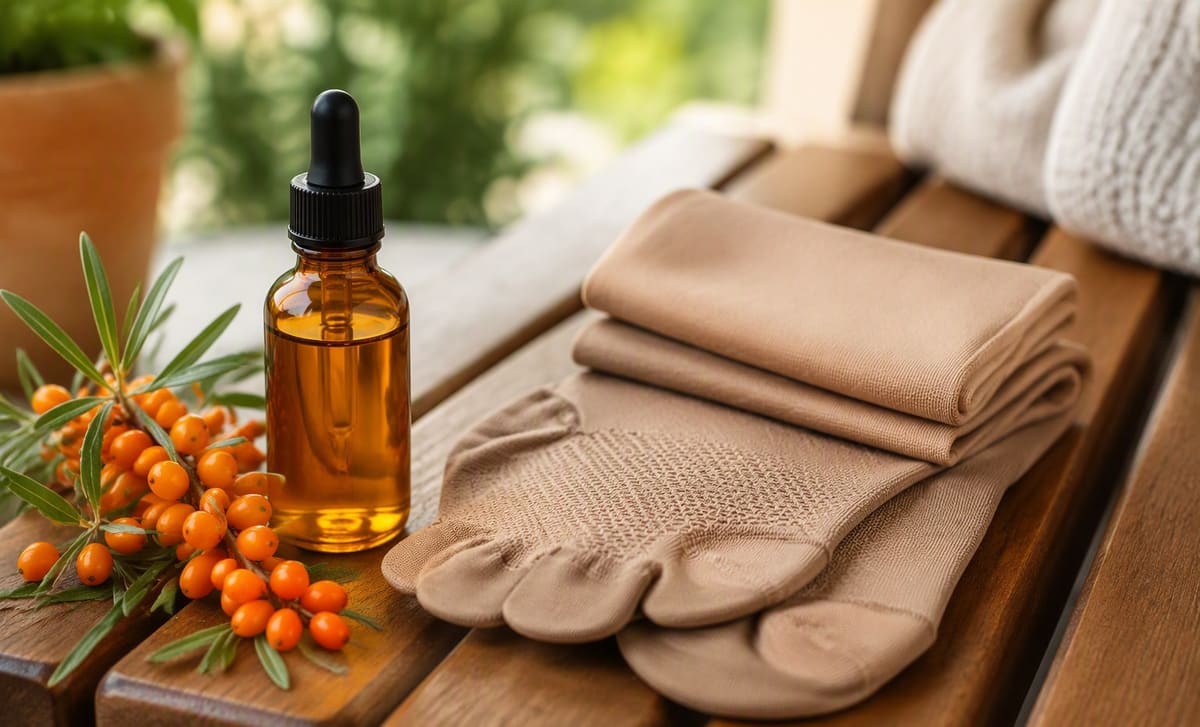
No study has tested sea buckthorn for varicose veins, spider veins, or any vein outcome. The claim is invented, assembled from lipid data and general antioxidant language. Varicose veins are a mechanical valve problem, and the fixes that work are mechanical too: compression, movement, and procedures.
The mechanics the claim ignores
Leg veins return blood uphill, and one-way valves keep it from pooling. When a valve fails, blood falls backward, pressure builds, and the vein stretches into the ropy, visible pattern people know. That is plumbing, not chemistry. No nutrient, oil, or antioxidant can rebuild a failed valve, which is why the entire evidence-based toolkit works on pressure and structure rather than on blood composition. The heart hub grades the claims that do have blood evidence behind them.
Where the vein claims come from
Follow the citations on a vein-health product page and they dissolve. The lipid meta-analyses measured cholesterol in blood, not valves in legs. The platelet study measured clotting behavior in 12 men. The composition papers catalog fatty acids and flavonoids. None of these is a vein study, and stacking them does not produce one. This is the standard pattern for invented claims: borrow real research from neighboring topics and let the reader assume the connection was tested.
The three tiers, sorted
- Real evidence: for sea buckthorn and veins, none. Zero trials, any form, any vein outcome. For the condition itself, compression, movement, raised legs, and procedures carry the outcome data.
- Plausible: nothing specific. The general antioxidant and lipid chemistry does not reach a mechanical valve failure, and calling it “vein support” does not change the physics.
- Marketing: “strengthens vein walls,” “improves venous tone,” and before-and-after leg photos. These trace to borrows from the lipid meta-analyses, the 12-man platelet study, and composition papers, none of which is a vein study. The clinical trials catalog shows the full human file, and veins appear nowhere in it.
Why “vein support” supplements persist
The category survives on a real sensation: heavy, aching legs at the end of the day. Anything swallowed alongside rest and raised legs gets credit for the relief the rest produced. Add the fact that veins worsen slowly, which gives any ritual months of uncheckable promise, and you have the perfect market for an untested capsule. The is it safe page confirms the oil is low-risk for most adults, so the real cost is money and delayed care, not safety.
What you can do this week
- Walk daily. Calf muscles are the second pump for leg veins, and using them is free.
- Raise your legs above heart level for 15 minutes in the evening.
- Try compression stockings from a pharmacy, properly sized. They are the cheapest evidence-backed intervention in this entire topic.
- Book the ultrasound if veins ache, swell, or show skin changes. One visit maps the valves and tells you whether a procedure would help.
- Skip the vein supplements, or at least buy them last, after the stockings.
Common mistakes
- Treating a mechanical problem chemically. Failed valves respond to pressure management and procedures. Blood chemistry is not the fault line.
- Waiting on a capsule while skin changes advance. Brown staining and thinning skin near the ankle are progression signs that deserve a vein clinic, not another month of softgels.
- Dismissing compression as old-fashioned. It has the best evidence per dollar in the field, and the modern versions are far from the stockings you are picturing.
The spider-vein sidebar
Spider veins, the fine red and blue webs, are the same valve problem at smaller scale, mostly a cosmetic concern rather than a medical one. The evidence picture matches: no supplement data, sea buckthorn included, and procedures (sclerotherapy, surface laser) as the effective option for people who want them gone. Makeup and self-tanner hide them cheaper than any capsule. What does not work is the same list as for their larger relatives: creams, oils, and anything swallowed.
What actually works
Compression stockings have real evidence for symptoms and progression, and they are unglamorous and cheap. Leg elevation, regular walking, calf muscle work, and weight management reduce the pressure load. When veins are symptomatic or cosmetically unacceptable, modern procedures close or remove the failed segment: thermal ablation, foam sclerotherapy, and related techniques with solid outcome data. A vein clinic can map your valves with ultrasound in one visit.
When a vein needs a doctor soon
Most varicose veins are a nuisance. Some patterns are not: a vein that becomes hard, hot, and painful, sudden swelling of one leg, skin turning brown or breaking down near the ankle, or any bleeding from a surface vein. Those deserve prompt assessment, the first two urgently. For the honest grades on neighboring claims, the circulation page covers blood flow.
Frequently asked questions
Can sea buckthorn oil fix varicose veins?
No, and nothing swallowed or applied to the skin can. Varicose veins are failed one-way valves in leg veins, a mechanical problem, and no study has tested sea buckthorn for any vein outcome. The interventions with evidence are compression stockings, leg elevation, exercise, and procedures that close or remove the failed vein. Aching, swelling, or skin changes near a varicose vein deserve a proper vein assessment.
What about horse chestnut or other vein supplements?
A few botanicals, horse chestnut included, have small trial literature for the aching and swelling symptoms, with modest and contested results. None of them rebuilds a failed valve, which is the actual problem in a varicose vein. If symptoms bother you, compression stockings have better evidence than any capsule, and a vein clinic can tell you in one ultrasound visit whether a procedure makes sense.