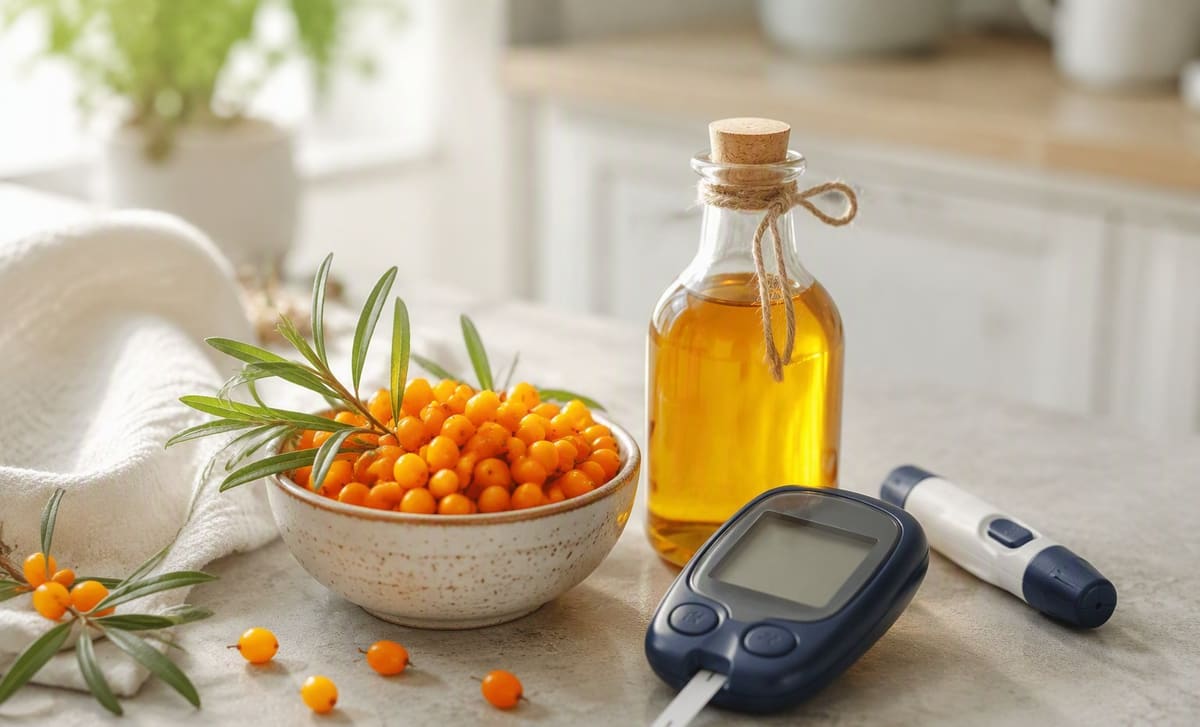
If you live with type 2 diabetes, here’s the honest frame: the pooled human trials show no change in fasting glucose, so sea buckthorn isn’t a blood-sugar treatment. One small meal study of berry puree did lower the after-meal insulin response, but that is a narrow signal, not glucose control. The same pooled trials did find lipid benefits in people with abnormal lipids, a common companion of type 2 diabetes. That’s the angle worth a conversation with your doctor.
What was actually studied
The 2022 meta-analysis pooling 15 randomized trials measured the metabolic risk factors that matter to you. Fasting glucose: no significant effect. Blood pressure and body weight: also no effect. Triglycerides, total cholesterol, LDL, and HDL: improved, with the clearest benefits in participants whose lipids were abnormal at baseline. The heart hub maps where each of those findings sits.
Those trials measured fasting glucose, the morning baseline. One separate study looked at the after-meal response instead. A 2018 crossover trial fed 18 overweight and obese men a sucrose-loaded meal with sea buckthorn puree, with strawberry puree, or with a fructose-matched control, and after the sea buckthorn meal their 30-minute insulin came in about 40% lower than control (a 39.6% drop, P less than 0.01). The glucose curve itself did not change. So the berry softened the insulin the body needed for one sweet meal. That is a genuine signal, and it is still a single acute study of berry puree eaten with food rather than an oil capsule, so it is not day-to-day glucose control and not a reason to touch any prescribed medicine.
The trial-by-trial detail lives on the blood sugar page, which covers the same evidence from the glucose angle.
Why the internet says otherwise
Search results insisting sea buckthorn lowers blood sugar are retelling mouse studies. Those experiments exist and they’re legitimate science. But they test rodents at doses and conditions nothing like a human daily softgel. When the pooled human trials find no glucose effect, the mice lose. Any page telling you otherwise is selling, not informing.
The lipid angle, made concrete
Here’s why this page exists at all. People with type 2 diabetes run abnormal triglycerides and low HDL at high rates, and cardiovascular disease is the main complication of the condition. That’s the exact profile the lipid trials found sea buckthorn improving, per the triglycerides page.
So the honest strength of the case isn’t glucose, where the data is a null. It’s the companion lipid problem your doctor is already watching. If your last panel showed high triglycerides or LDL alongside your diabetes, the cholesterol page has the studied doses and the recheck schedule to bring to your next appointment. Hitting those doses means counting grams of oil rather than capsules, and our capsules guide scores the products that print that number on the label.
The conversations to have first
Your prescriber, before starting. Diabetes management is a dosing system, and adding anything that might touch lipids, platelets, or digestion belongs in that system rather than beside it. Sea buckthorn oil showed a mild antiplatelet effect in one small study, which matters if you take aspirin, and daily aspirin is common in diabetes care. The safety hub explains.
The sugar check. Oil supplements carry no sugar. Juices and blends can carry plenty, and some get marketed directly at diabetics. The sugar content page documents it. Read the carbohydrate line, not the front label.
The expectations talk, with yourself. The proven glucose tools remain the unglamorous ones: prescribed medication, food patterns, movement, sleep, and weight management where relevant. Sea buckthorn can sit alongside them as food, or as a lipid-focused supplement your doctor approves. It can’t replace any of them.
If your doctor approves the oil
Keep your monitoring routine untouched. Check what you checked, when you checked it. The pooled data shows no glucose effect in either direction, so a shift in your readings points to food, activity, illness, or medication. Not the softgel.
Two habits protect you: telling your prescriber the dose and brand you take, and never letting a supplement bottle adjust your medication schedule, even in your own head. That first habit is easier with a format that states its milligrams plainly, and how the formats stack up on dose and cost is the short version of which ones do. The safety review covers the tolerability picture.
Mistakes worth skipping
- Adding a supplement and changing three other things the same week. With five moving parts, your log can’t tell you what worked.
- Buying “diabetic” juice blends. The front label says wellness. The carbohydrate line says otherwise.
- Crediting the softgel for good weeks. Good weeks come from the boring machinery: medication taken, meals measured, steps walked. Let the credit go where the work went.
Reasonable to discuss with your doctor: a studied-dose oil for the lipid angle. Reasonable to skip: sweetened juices aimed at diabetics and any product whose pitch is blood sugar control. The metabolic syndrome page catalogs the studies.
Frequently asked questions
Can diabetics take sea buckthorn?
Ask your doctor first, and bring the label. No human trial shows it lowers glucose, so it is not a treatment, but the pooled trials found lipid improvements in people with abnormal lipids, which is the angle worth discussing. Watch sugar in juice products, and treat any supplement as an addition to prescribed care, never a substitute.
Will sea buckthorn interact with metformin or other diabetes drugs?
No interaction with metformin or the common diabetes medications has been documented, and pooled trials found no fasting-glucose effect in either direction, which is why a clash is unlikely. Unlikely is not the same as cleared: your prescriber should know everything you take, because the genuine cautions are the mild antiplatelet signal if you also use aspirin, and the sugar hiding in juice products rather than in the oil.