When researchers pooled every randomized trial of sea buckthorn and metabolic risk factors, fasting blood sugar did not move. That 2022 meta-analysis of 15 trials is the best evidence we have, and its fasting glucose result is a clean null. One small meal study of berry puree did find a lower after-meal insulin response, a different measurement that still does not make the berry a blood-sugar treatment. The “lowers blood sugar” claims you see online trace back to mice. Here is the full picture.
The headline is a null
The 2022 meta-analysis in Phytotherapy Research pooled 15 randomized controlled trials of sea buckthorn against metabolic-syndrome risk factors. Blood lipids improved, especially in people whose levels were abnormal to start. Fasting blood glucose did not change significantly. Neither did blood pressure or body weight. The heart hub shows where the real signal lives, and it is lipids. An earlier independent meta-analysis of 11 trials pointed the same direction on lipids.
A null from pooled human trials outranks any single positive claim. When fifteen experiments collectively find nothing, the honest sentence is “no proven effect”, not “more research needed, buy anyway”.
Fasting is not the only number
Here is where the blanket phrase “no effect on blood sugar” gets sloppy, and we want to be precise. The 2022 meta-analysis measured fasting glucose, the level after a night without food. Blood sugar also spikes after you eat, and that after-meal response is a separate measurement the pooled trials did not capture.
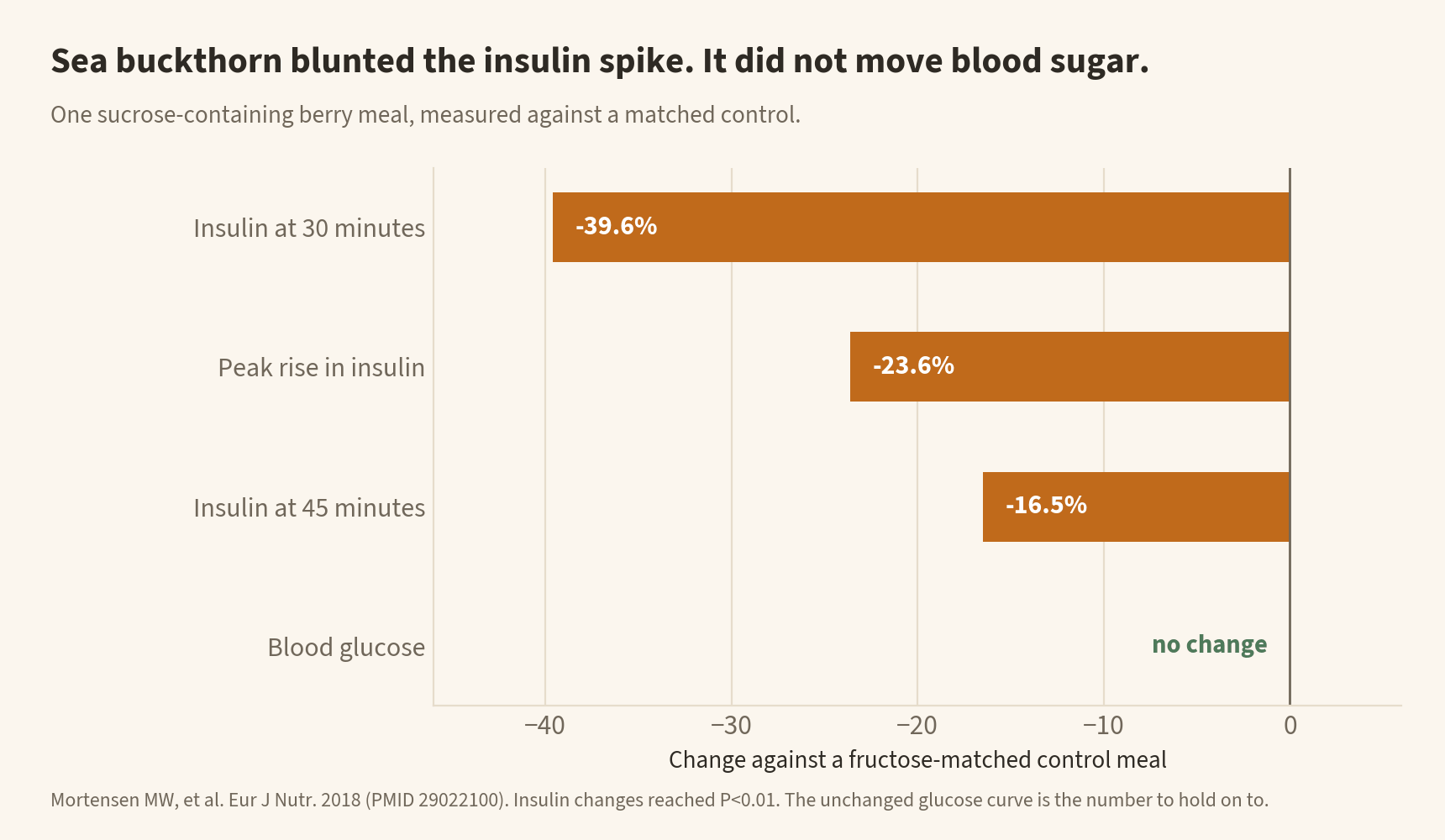
One small study did look at it. In a 2018 crossover trial at the University of Copenhagen, 18 overweight and obese men ate the same sucrose-loaded meal three times over, once with sea buckthorn puree, once with strawberry puree, and once with a fructose-matched control containing no berries. After the sea buckthorn meal, their insulin at the 30-minute mark came in about 40% lower than control (a 39.6% drop, P less than 0.01), the 45-minute value was 16.5% lower, and the peak rise in insulin was 23.6% lower and arrived later. Glucose itself did not move. The authors also report a composite glycaemic profile index that scored 44.7% better than control at P less than 0.01, and that index is a derived score rather than a blood sugar reading, which is why the unchanged glucose curve is the number to hold on to.
See the data behind this chart
| Measure | Change against a fructose-matched control meal |
|---|---|
| Insulin at 30 minutes | 39.6% lower |
| Peak rise in insulin | 23.6% lower |
| Insulin at 45 minutes | 16.5% lower |
| Blood glucose | no change |
Read that for exactly what it is. One acute-meal study in 18 men, measuring a single sweet meal, not weeks of supplementation and not fasting numbers. It also fed people berry puree as part of the meal, not an oil capsule, so it says nothing about the softgels most shoppers mean by a sea buckthorn supplement. Blunting the insulin spike after a sugary meal is a real and interesting signal, and the authors pitch it exactly that modestly, as a possible culinary tool for lowering meal insulin. It is not evidence that sea buckthorn controls blood sugar day to day, and it is not a reason to change anything about diabetes care. The two human results sit together honestly. No change in fasting glucose across 15 pooled trials, and a lower, later after-meal insulin response in one small meal study. Neither makes it a treatment.
Where the claims actually come from
Mouse studies on sea buckthorn oil and glucose metabolism exist, and they are why the claim will not die. Rodent metabolism is genuinely useful for generating hypotheses. It is also famously generous, producing effects that vanish in human trials. Until a human trial shows a glucose benefit, the mouse data stays in the hypothesis column, which is exactly where the research hub files it.
The juice-blend sugar catch
One blood-sugar issue is real and has nothing to do with metabolism claims: the products themselves. Sea buckthorn juices and juice blends can carry meaningful sugar, and sweetened formats work against anyone watching glucose. If you drink it, unsweetened and diluted is the sensible default, and the label’s carbohydrate line matters more than the front-of-pack promises. Only two bottles cleared that bar when we scored the juice shelf, which tells you how common the sweetened blend is. Oil supplements, by contrast, contain no sugar at all.
What fasting glucose actually measures
The fasting number is your baseline: how much sugar circulates after a night without food. It reflects how well insulin is doing its job of moving glucose out of the blood and into cells. When that system strains for years, the fasting number creeps, and the creep is what earns the prediabetes and diabetes labels. Moving it reliably takes medication, weight change, food pattern shifts, or some combination. That is the bar any “lowers blood sugar” claim has to clear, in humans, against placebo.
The three tiers, sorted
- Real evidence: a clean null on fasting glucose. Fifteen pooled randomized trials in the 2022 meta-analysis found no significant effect, and the same analysis found the lipid effects covered in the cholesterol meta-analysis breakdown. One analysis, both answers. Honesty requires quoting them together. The one human wrinkle is the 2018 meal study above, which lowered early after-meal insulin but left glucose unchanged, a narrow signal from a single sweet meal and still not glucose control.
- Plausible: mouse studies on sea buckthorn oil and glucose metabolism. Legitimate hypothesis-generating science that loses to the pooled human null every time the two are compared.
- Marketing: “supports healthy blood sugar” on supplement labels and listicles, which trace to the mice and skip the fifteen human trials. Also sweetened juice blends sold with wellness language, which work against the very goal they advertise, as the sugar content page lays out.
If you monitor at home
People who check their glucose have a built-in truth detector, and it is worth using honestly. A null in pooled trials means your meter will not show a sea buckthorn effect, so credit your readings to the things that actually move them: your medication, your meals, your movement, your sleep. If you add the oil for the lipid angle with your doctor’s approval, keep the meter habit exactly as it was, and never adjust a dose based on what a supplement label implied. The drug interactions page is the checklist to bring to that conversation.
Common mistakes
- Trusting front-of-pack claims over the carbohydrate line. The label’s carb count is the only blood-sugar-relevant fact on a juice bottle.
- Interpreting stable readings as supplement success. Stability is what your management routine already produces. Do not let a new softgel take the credit.
- Assuming natural sugar does not count. Sweetened berry blends raise glucose like any sweet drink, whatever the berry’s mouse-study reputation says.
Who this page is for
If you monitor blood sugar for prediabetes or type 2 diabetes, the living- with-diabetes version of this guidance is on the diabetes page, including the medication conversation to have before adding supplements. If you came from a claim that sea buckthorn fixes blood sugar, you now have the pooled-trial answer, and the metabolic syndrome page catalogs the studies behind all of it.
Frequently asked questions
Does sea buckthorn lower blood sugar?
Not in the way people mean. A 2022 meta-analysis pooling 15 randomized controlled trials found no significant effect on fasting blood glucose, along with no effect on blood pressure or BMI. In one small 2018 meal study, insulin 30 minutes after a sugary meal came in about 40% lower when the meal included sea buckthorn puree, but glucose itself did not move, and that is not glucose control. The lower-blood-sugar claims online trace to mouse studies, which are hypothesis grade. Diabetes management belongs with your doctor and prescribed treatment.
Is sea buckthorn juice okay if I watch my blood sugar?
Read the carbohydrate line, not the front of the bottle. Pure sea buckthorn juice is tart and relatively low in sugar, but many commercial juices and blends are sweetened, and sweetened formats work against glucose control. Dilute unsweetened juice, count it in your day, and remember the oil supplements carry no sugar at all. The glucose-lowering promises on some labels contradict the pooled human trials.