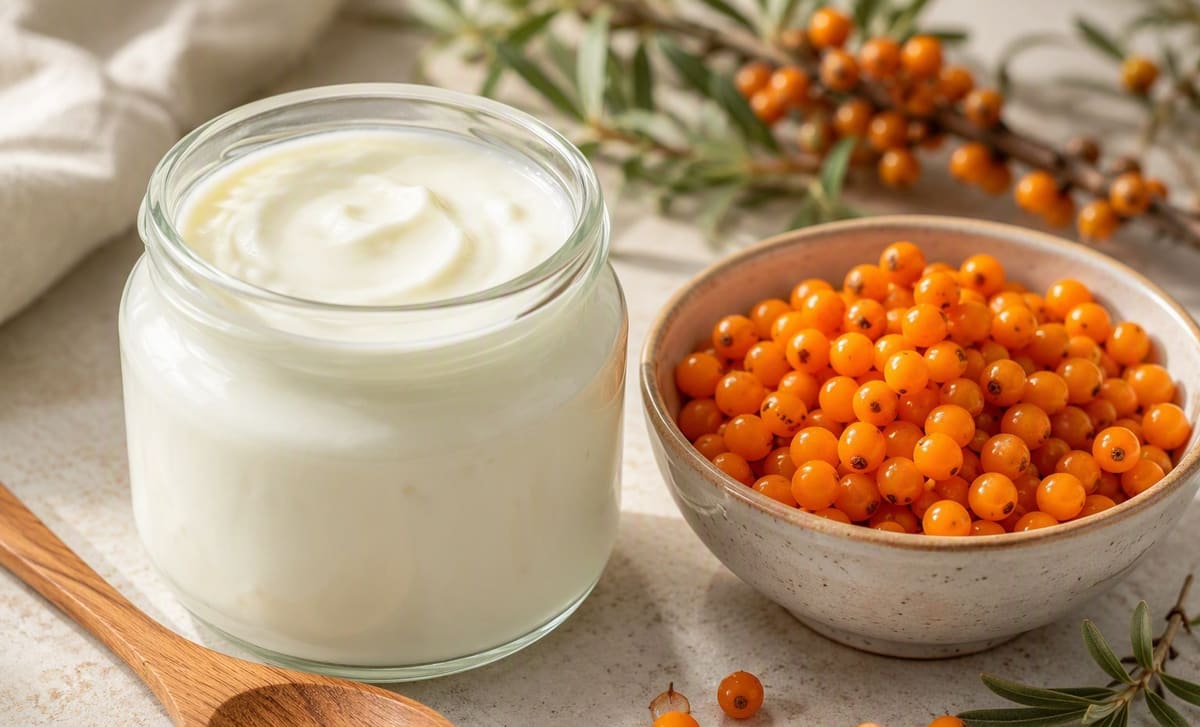
The prebiotic case for sea buckthorn is a composition argument, and it’s a decent one: fiber plus polyphenols should interest your gut microbes. What doesn’t exist is the experiment. No human trial has measured microbiome outcomes after sea buckthorn, so every microbiome claim is a plausible story waiting for its first test.
The logic, stated fairly
Two kinds of cargo do the work here. First, fiber. Whole berries and powders carry it, gut bacteria ferment it, and fermentation feeds the microbial ecosystem while making short-chain fatty acids, the same compounds that nourish the gut barrier the leaky gut trade oversells. Second, polyphenols. The berries are loaded with flavonoids like quercetin, kaempferol, and isorhamnetin, and most of that load passes through the small intestine unabsorbed. It arrives in the colon intact, which is exactly where you want it, because that’s where the microbes are. The gut hub shows where every neighboring claim stands on the same evidence scale.
Other polyphenol-rich foods earned their prebiotic reputation through the same route. And phytochemical analyses across cultivars confirm the cargo is real, though the amounts swing around by berry source.
The missing experiment
Now the gap. Researchers have never randomized people to sea buckthorn, sequenced their gut microbes, and reported what changed. No diversity scores. No species shifts. No short-chain fatty acid endpoints.
Microbiome science is littered with beautiful composition arguments that fell apart in actual humans. That’s why the field runs on measured outcomes instead of ingredient lists. Until the trial exists, the honest sentence is short: plausible from composition, unproven in people.
Form decides everything here
Say you find the prebiotic logic persuasive. Fine, but act on it with the right fraction of the plant. The oil is nearly pure fat. The fiber is gone, and almost all of the polyphenols stay behind in the pressing. Whole berries, dried berries, and powders keep both, and the dried berries worth buying are the easiest of those to keep on a shelf. The fresh vs dried vs powder page compares what each form retains, and the digestion page puts the fiber benefit in the wider gut picture.
One more thing, and it matters more than any supplement: an ordinary varied diet already delivers fiber and polyphenols in bulk. Sea buckthorn can join that pattern as a food.
What a real microbiome trial would measure
The study that would settle this is easy to sketch and expensive to run. Randomize adults to sea buckthorn or placebo for months. Sequence stool samples before and after. Report diversity, species shifts, and fermentation products like short-chain fatty acids. Compare the change between groups, not just within them, because microbiomes drift on their own.
That design is routine in probiotic research today. For sea buckthorn it has simply never been done.
The polyphenol half of the cargo
The flavonoid fraction is the more interesting half of this story. Quercetin, kaempferol, and isorhamnetin glycosides are poorly absorbed in the small intestine, which sounds like a weakness and is actually the whole mechanism. Most of the load reaches the colon intact, where microbes cleave it and transform it. The polyphenols page and the flavonoids page quantify what the berries carry. Plausible, again. Unmeasured in people, again.
The cultivar variable
Phytochemical analyses across cultivars find wide variation in flavonoid levels, and that matters more than it first appears. Two products with identical labels can deliver meaningfully different cargo depending on species, cultivar, and origin. Any future trial will have to standardize its material before the results mean anything, and no consumer label today tells you which berries went in. This field is still characterizing the raw material, never mind the health effects.
Feeding microbes without a supplement budget
The cheapest microbiome intervention ever studied is dietary variety. Different plants, different fibers, week after week. Legumes, whole grains, nuts, vegetables, and fruit deliver fiber plus polyphenols in combinations no single berry matches, as the fiber page spells out. Sea buckthorn slots into that pattern nicely as one more plant. What it can’t do is replace the pattern. Neither can anything else in a capsule.
So should you care?
Your microbes will ferment what sea buckthorn delivers, because microbes ferment everything fermentable. Will that change your health in a way you can measure? Nobody has asked the question in people. Curiosity warranted. Claims not.
Where the field is heading
Microbiome science has matured past the hype phase into measured skepticism: effects are real but modest, personal, and hard to predict from composition alone. That’s the right lens for sea buckthorn too. Expect any future finding to be a small shift in a large ecosystem, not a transformation, and treat anyone promising the transformation as advertising. The berries can join a varied diet on honest terms today, no sequencing required. That’s the deal whole foods have always offered.
Frequently asked questions
Does sea buckthorn feed gut bacteria?
The composition makes it plausible and nobody has tested it in humans. Whole berries carry fiber and polyphenols, and both can reach the colon where microbes ferment them, which is the standard prebiotic logic. But no trial has measured microbiome changes in people taking sea buckthorn, and the oil carries almost none of the relevant cargo. Whole-berry forms are the only ones matching the theory.
Is sea buckthorn oil a prebiotic?
No, not by any reasonable definition. Prebiotics work by delivering fermentable material, fiber or polyphenols, to gut microbes. The oil is nearly pure fat: the fiber is gone and almost all polyphenols stay behind in the pressing. Whole berries, dried berries, and powders keep the prebiotic cargo, though even they lack a human microbiome trial.