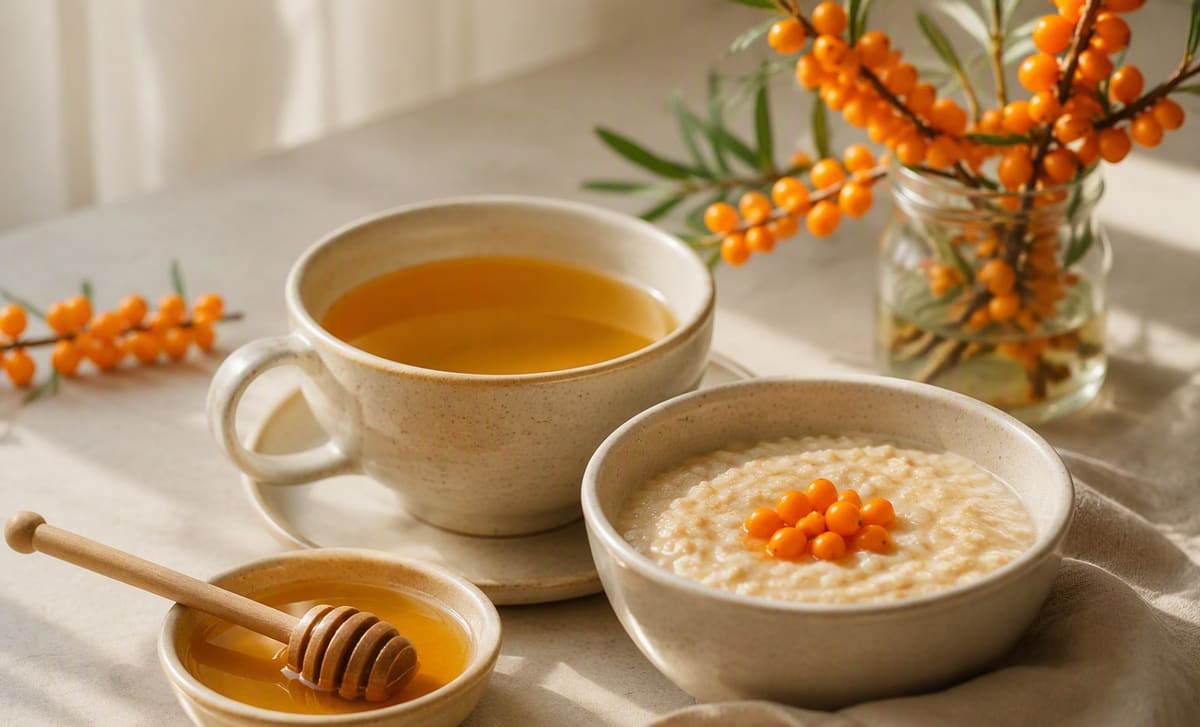
Sea buckthorn is a traditional stomach remedy with no human gastritis trial behind it. The tradition is real, the animal data is interesting, and neither tells you whether your inflamed stomach will feel better. The straight juice is the wrong form for this job, and persistent gastritis has identifiable causes worth finding.
The tradition, and its limits
Tibetan and Mongolian medicine reached for sea buckthorn for stomach complaints over centuries, and that record says something genuine about safety and popularity as a food. What it can’t tell you is whether it worked. Tradition has no control group. Plenty of long-used remedies later failed their first proper test, and sea buckthorn for gastritis has simply never had one.
The data that does exist
The gastritis-adjacent research is animal and laboratory work: rodent studies where oil reduced experimentally damaged gastric mucosa, and composition studies cataloging fatty acids, carotenoids, and flavonoids. That file supports a hypothesis worth testing in people. It doesn’t support a purchase decision today, and no human trial has measured gastritis symptoms, healing, or biopsy results after sea buckthorn.
The form problem
An inflamed stomach lining and a sharply acidic juice are a bad pairing. Pure sea buckthorn juice carries malic, quinic, and citric acids at levels that earn it a place on the aggravator list, and the acid reflux page spells out the chemistry. Oil capsules skip the acidity entirely, which makes them the only defensible form for someone with gastritis who still wants to try sea buckthorn, after their doctor signs off. Our sea buckthorn capsules page does the dose math, since one softgel a day is a quarter of what the trials used, and the safety hub covers the general cautions.
What persistent gastritis actually needs
Two causes account for most cases, and both are findable and treatable. H. pylori infection shows up on breath, stool, or biopsy tests and clears with combination antibiotics. NSAID painkillers inflame the lining directly, and stopping or swapping them, with a prescriber’s guidance, removes the insult. Acid suppression helps the lining recover either way. Pain that wakes you at night, vomiting, black stools, or anemia move the situation from manage-it to investigate-it.
The digestion page covers the mucosal rationale in full, and the gut hub grades every neighboring claim.
What a gastritis workup looks like
The appointment is simpler than the symptoms feel. Expect a history covering pain timing, food relationships, alcohol, and every pill you take, because the medication list is often the answer. An H. pylori test follows, by breath, stool, or biopsy if a scope is warranted. Most cases resolve into one of the two common causes, and both have treatments with real evidence. The whole process typically takes weeks, which beats months of guessing with supplements.
The NSAID trap
Clinicians see this pattern constantly. Ibuprofen for the back, naproxen for the knee, aspirin for the heart, and a stomach lining quietly inflamed by all of it. NSAIDs block the prostaglandins that maintain the stomach’s protective mucus, and the damage can build without dramatic symptoms until it doesn’t, sometimes as far as a gastric ulcer. Never stop a prescribed NSAID or aspirin on your own, because some are prescribed for serious reasons. Do tell your prescriber about stomach symptoms, because swaps, lower doses, and protective co-prescriptions exist for exactly this problem.
Eating with an inflamed stomach
Food advice for gastritis is mostly pattern recognition: smaller meals, less alcohol, and a personal trigger list rather than a universal one. The universal items are the acidic ones, and straight sea buckthorn juice sits among them by chemistry, as the organic acids page details. Diluted juice in a smoothie is a gentler experiment for a calm stomach, not a plan for an inflamed one. When the lining has healed, the berry comes back as a food, which is all it ever needed to be.
The two-cause map, widened
H. pylori and NSAIDs dominate, but the workup also considers alcohol, severe physiological stress, bile reflux, and the rarer autoimmune form. The point of naming them isn’t to turn you into a diagnostician. It’s to show that gastritis is a finding with causes attached, and the cause decides the treatment. A supplement marketed for all of it is marketing to the word rather than the condition.
What a real trial would have to measure
So what would it take for sea buckthorn to earn a gastritis claim? Someone would need to randomize diagnosed patients to oil or placebo and measure what patients feel: pain scores, medication use, endoscopic healing. That study doesn’t exist, and the how to read studies page shows why each of those design elements matters. Until it’s run, the honest grade is tradition plus animal data, full stop.
The alcohol paragraph
Alcohol deserves its own sentence in any gastritis discussion, because it inflames the lining directly and amplifies every other cause. Cutting back? Unglamorous, free, and more evidence-backed than any soothing supplement on the shelf.
The timeline
Most gastritis improves within days to weeks once the cause is addressed. Symptoms that persist past that deserve the workup, not a stronger supplement.
Frequently asked questions
Does sea buckthorn help gastritis?
It has never been tested for gastritis in humans. The reputation comes from traditional stomach use and from animal studies, not from trials. The straight juice is sharply acidic and is the wrong form for an inflamed stomach. Persistent gastritis deserves a medical evaluation, because H. pylori infection and NSAID use are the common causes and both have real treatments.
What causes most gastritis?
Two causes account for most cases. H. pylori infection is detectable by breath, stool, or biopsy tests and curable with combination antibiotics. NSAID painkillers inflame the lining directly, and stopping or swapping them with a prescriber's guidance removes the insult. Finding the cause matters more than any stomach-soothing product.