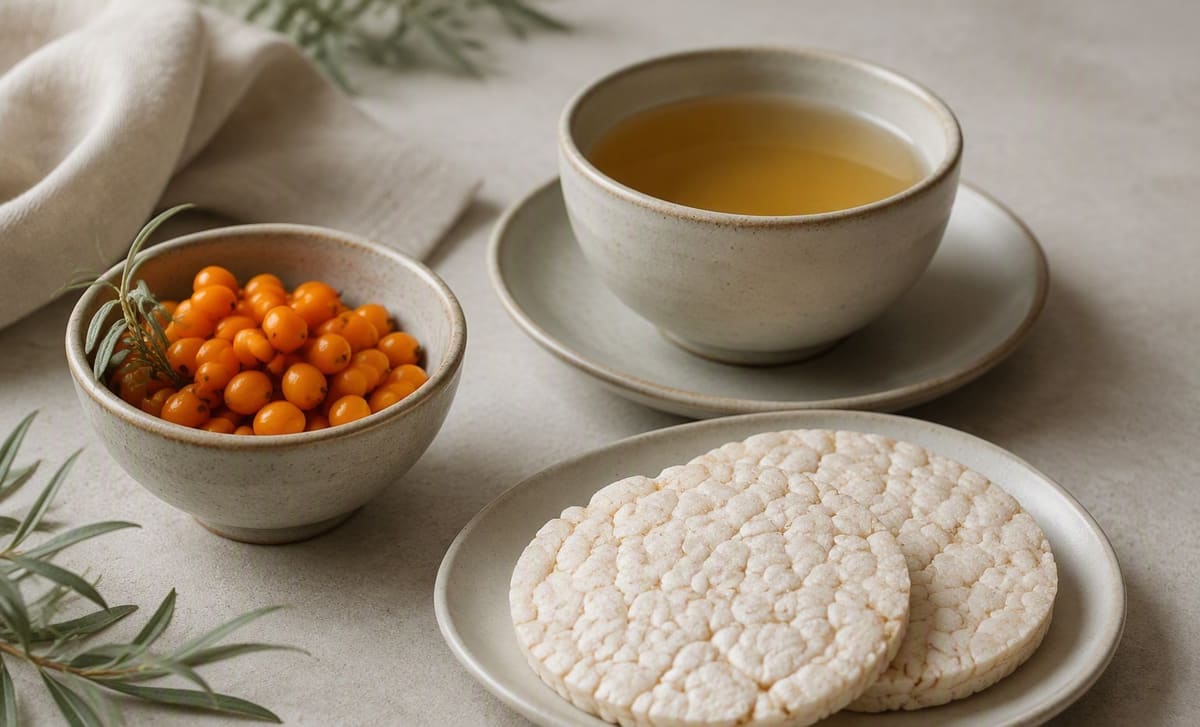
No study has ever dosed sea buckthorn in people with IBS. The marketing borrows from traditional stomach use and from animal gut work, and neither answers the question. IBS already has an evidence-backed dietary route, the low-FODMAP diet, and the most popular sea buckthorn form is a plausible symptom trigger rather than a remedy.
The evidence inventory
The IBS-specific file is empty. No randomized trial, no open-label pilot, nothing measuring bloating, pain, or bowel habits in diagnosed patients. What exists is adjacent: centuries of traditional use for stomach complaints, rodent studies on gut lining and inflammation, and a composition rich in fiber, fatty acids, and polyphenols. Adjacent evidence is how research questions start. It is not how treatment decisions get made, and the gut hub grades it accordingly.
What has actual human evidence
Standard gastroenterology guidance for IBS starts with diet, and the low-FODMAP approach is the best-tested option: a structured trial of restricting fermentable carbs, then reintroduction, ideally run with a dietitian. Soluble fiber such as psyllium has trial support, and peppermint oil capsules have placebo-controlled data for global symptoms. None of this is exotic, and all of it outranks any untested supplement.
Form matters more than usual
Straight sea buckthorn juice is a poor match for a touchy gut. It is sharply acidic, and it carries natural sugars, including fermentable ones, that can feed bloating. The juice nutrition page and the sugar content page give the numbers. Oil capsules skip the acidity and the sugar, which makes them the gentler experiment if your doctor agrees, but gentler is not the same as proven. Powder adds fiber, which can help constipation-dominant IBS and aggravate the bloating-dominant kind. Subtype decides.
The red flags come first
Blood in the stool, unintentional weight loss, anemia, fever, or symptoms that wake you at night are not IBS until a doctor rules out everything else. That workup is the actual starting point, and the digestion page will still be here once you have a diagnosis in hand.
The subtype problem
IBS is not one condition but a label for a pattern, and the pattern splits by stool form: constipation-dominant, diarrhea-dominant, and the mixed kind that alternates. This matters for any supplement experiment, because an intervention that helps one subtype can aggravate another. Fiber is the classic example, easing constipation-dominant IBS while worsening the bloating of other forms. Sea buckthorn powder is fiber, so it inherits that split verdict. The oil skips the fiber question and lands on unproven for everyone.
What the dietitian actually does
The low-FODMAP diet has the best human evidence in IBS, and doing it properly is more structured than the internet version. Phase one restricts fermentable carbohydrates for a few weeks to see whether symptoms settle. Phase two reintroduces foods group by group to find your personal triggers, because the goal is the widest diet you can tolerate, not the narrowest one you can survive. A dietitian keeps the process nutritionally sane and interprets the results. It is less glamorous than a berry protocol, and it works measurably more often.
The juice’s specific liabilities
Two features make straight juice a poor IBS candidate. The acidity can irritate a sensitive gut, and the natural sugars include fermentable ones that feed the bacteria producing gas. Dilution softens both without removing either. If you are constipation-dominant and curious, the powder page and the fiber page frame the more plausible experiment: small spoon, food matrix, slow ramp.
Running an honest self-experiment
If your diagnosis is secure and your doctor is unbothered, a personal trial can be done in a way that means something. Pick one form, one dose, and one symptom to track. Change nothing else for two weeks. Score the symptom daily rather than trusting memory, then stop and see whether it returns. That is a single-person trial with the rigor a berry deserves, and it will tell you more than any testimonial. Symptoms that worsen end the experiment early, and red flags override it entirely.
Why the trial gap persists
IBS trials are hard: endpoints are subjective, placebo response runs high, and funding follows patentable molecules rather than berries. None of that lowers the bar for claims. It explains why the honest answer here is likely to stay untested for years, and why the condition’s proven routes deserve to be exhausted first.
The stress-gut loop
IBS symptoms track stress closely, through real gut-brain signaling rather than imagination. Gut-directed psychological therapies have trial support, and even simple measures like regular meals, unhurried eating, and decent sleep move symptoms for many people. Treating the gut means treating the whole pattern around it, which is one more reason a single supplement was never going to be the answer. If stress management sounds soft next to a capsule, notice that it has the better trial file of the two.
The timeline
Give any structured change two to four weeks before judging it. Daily snapshots mislead in a condition defined by fluctuation.
Frequently asked questions
Does sea buckthorn help IBS?
Nobody honestly knows, because no trial has tested it in IBS patients. The dietary approach with real human data is the low-FODMAP diet, ideally with a dietitian. Straight sea buckthorn juice is acidic and sugary enough to plausibly aggravate symptoms, while oil capsules are gentler but unproven. Persistent bowel changes deserve a proper diagnosis before any supplement.
Is sea buckthorn juice OK for IBS?
It is a poor match. Straight juice is sharply acidic and carries fermentable natural sugars, both plausible symptom triggers for a touchy gut. If you experiment at all, powder suits constipation-dominant IBS better, capsules are gentler but unproven, and any trial should be small, slow, and stopped at the first sign of worsening.