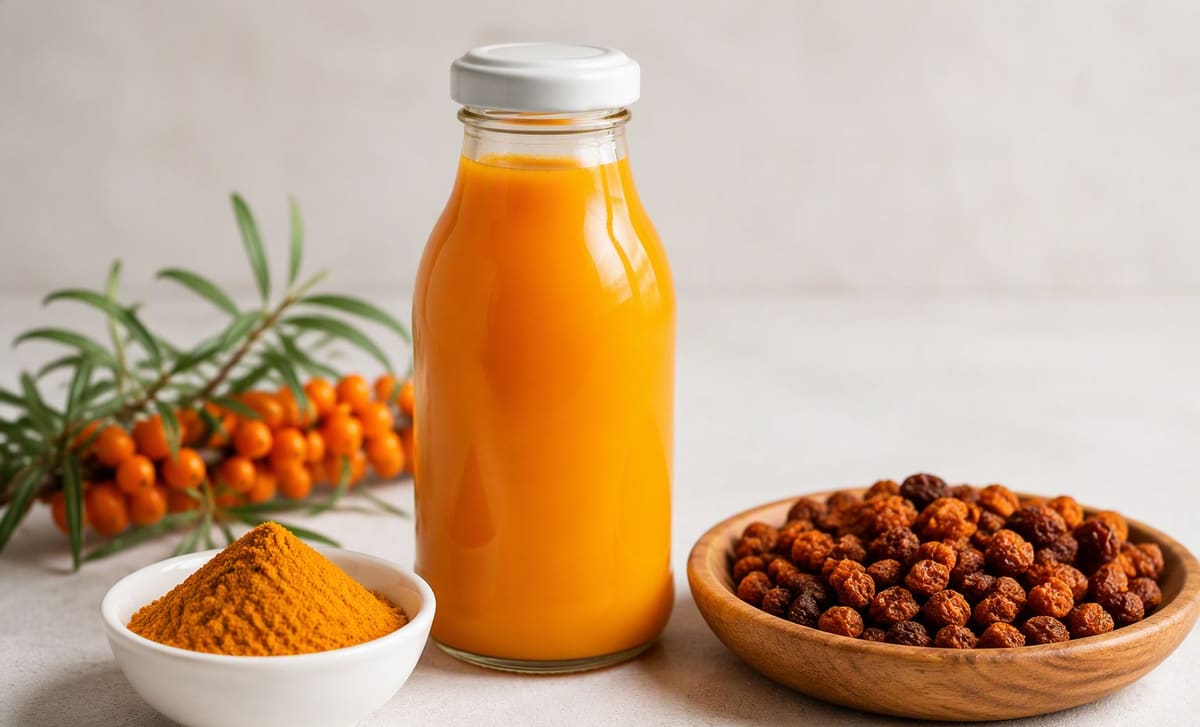
Erbology is the European purist of this category: a UK-based organic brand built on sea buckthorn and other berries, selling single-ingredient juice, powder, and dried berries with certified-organic sourcing. It scores 7.8 in our rubric, held back by thin third-party documentation and by the fact that juice and powder are not the oil formats the clinical trials used.
Research-based review per our editorial policy. We found no published lab assays for this line, so certification paperwork is what we scored.
A 7.8 only means something in context, and the context is the rest of the field.
The scorecard
| Criterion | Weight | Erbology result | Score |
|---|---|---|---|
| Purity and sourcing | 30% | European berries, certified organic, single-ingredient | 8.5 |
| Fatty acid profile | 25% | Whole-berry juice and powder, not concentrated oil | 7.5 |
| Third-party testing | 20% | Organic certification; no published lab assays found | 7.0 |
| Value | 15% | Niche import pricing; check current price | 7.5 |
| Transparency | 10% | Clean single-ingredient labels, no filler blends | 8.5 |
What we verified
- The company: UK-based, built around sea buckthorn and other berries, with European sourcing across the line.
- Certification: organic certification on the sea buckthorn products we checked.
- The line: organic sea buckthorn juice, berry powder, and dried berries, each single-ingredient. No blends hiding behind a sea buckthorn label.
- What we could not verify: published third-party lab results such as fatty acid assays or contaminant screens. That is a documentation gap, not an accusation, but our rubric scores what we can check.
The products we scored
- Organic sea buckthorn juice: the flagship. Whole-berry juice keeps the vitamin C along with the famous acidity, so dilute it and rinse after, as the safety hub explains. Check current price.
- Organic sea buckthorn powder: the smoothie-friendly format, with fiber and carotenoids intact and the omega-7 diluted by definition. Powder is food, not a trial-dose supplement.
- Organic dried berries: the snack format, and the oldest way people actually ate this plant.
Where Erbology falls short
The studied formats are oils at 1 to 3 grams a day, and Erbology’s line is juice, powder, and fruit. If your goal is matching the doses used in the skin or vaginal trials, this is the wrong shelf and our capsules guide is the right one. Documentation is the second gap: certifications yes, published assays no.
Who should buy Erbology
Buy it if you want the berry as organic food from a European specialist, especially juice and powder for the kitchen. Skip it if you want a trial-matched oil dose with printed fatty acid numbers: that contest stays between SeabuckWonders and SIBU, as the brands ranking shows.
One safety note for the ingestible line: sea buckthorn has a mild antiplatelet signal at high oil doses, and concentrated supplements are unstudied in pregnancy. If you take blood thinners or are pregnant, read the safety hub first.
The label, line by line
Erbology’s labels are the simplest in this cluster: one ingredient, named exactly. A juice that is sea buckthorn and nothing else. A powder that is powdered berries and nothing else. That is what the 8.5 on transparency rewards, because there is no blend to hide behind and no filler to dilute. The two things the label cannot show are a fatty acid assay and a contaminant screen. Neither is published, which is why third-party testing sits at 7.0 despite the organic certification. Certification audits the farming and handling. An assay measures the product itself. Our rubric treats them as different evidence, and this line has the first without the second.
The cost-per-day question
Food formats change the math. You do not dose juice or powder against a clinical trial. You buy them the way you buy any specialty food, by serving. Niche import pricing puts Erbology above commodity juices, and that is fair for certified-organic single-ingredient imports. What you should not do is try to reconstruct a trial oil dose from juice. The studied formats are oils at 1 to 3 grams a day, as the study dosages page lays out, and no realistic daily pour of juice gets there. Buy this line for the kitchen and judge it on food value per serving, not on supplement cost per day.
How it compares
On the ranked list Erbology sits fourth at 7.8, behind the two Himalayan supplement specialists and Weleda. That is the right neighborhood. It beats every supplement brand on ingredient simplicity and loses to them on format, because the trials used oil. Different contest, different winner.
What would raise or lower the score
Raise it: published third-party assays. A single fatty acid panel per product would move the testing score and confirm what the clean labels imply. Lower it: any drift from single-ingredient purity toward blends, or certification lapses. The format ceiling is structural. Juice, powder, and fruit will never match a concentrated oil on fatty acid density, so the 7.5 on fatty acid profile is about as high as this shelf can go.
What to verify before you buy
Three checks on the brand’s current site. First, that the organic certification is still current for the product you want. Second, the ingredient list, to confirm it is still single-ingredient. Third, the current price, since import pricing shifts. If your real goal is a trial-matched oil, the oil guide is the right page, and this brand will not be on it. If your goal is organic sea buckthorn as food, this is the cleanest documented option we have scored.
Frequently asked questions
Is Erbology a good sea buckthorn brand?
For the food formats, yes. Erbology is a UK-based organic specialist selling single-ingredient sea buckthorn juice, powder, and dried berries with certified-organic European sourcing. It scores 7.8 in our rubric, losing points on the absence of published lab assays and because juice and powder are not the oil formats the clinical trials used.
Where does Erbology source its sea buckthorn?
From Europe, with organic certification across the sea buckthorn line we checked. The brand's whole positioning is single-ingredient purity and European sourcing, and its labels match that promise. What we could not find are published third-party lab results, which is why the score stops at 7.8.