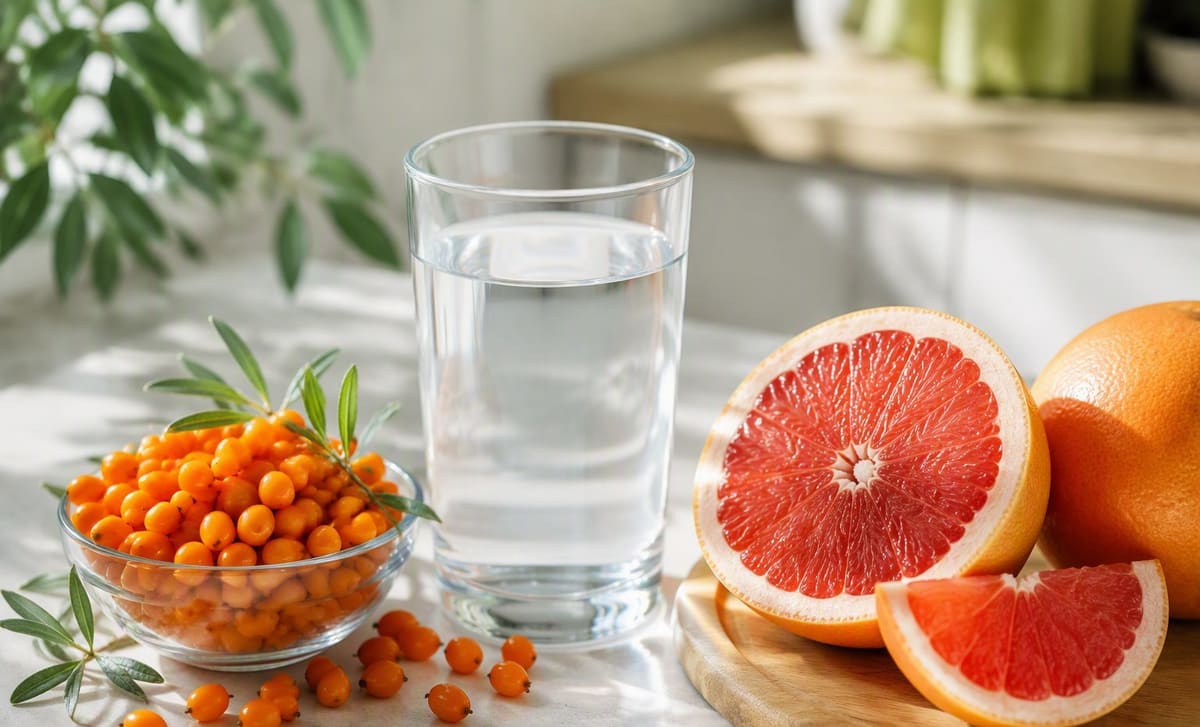
No human trial has tested sea buckthorn for liver health. What exists is traditional use for liver complaints and animal studies exploring liver protection, both real, neither decisive. And a word of warning upfront: “detox” is the red flag of this topic. A healthy liver detoxifies itself, and no berry does that job for it.
What was tested, on what, and what happened
Our rule for this section, applied to the liver file:
- Traditional use: Tibetan and Mongolian medicine used sea buckthorn for liver and digestive complaints over centuries. Real history, not a controlled test.
- Animal data: rodent studies in the research literature explore sea buckthorn extracts against chemically induced liver damage, a standard screening design. Interesting for generating hypotheses, useless for dosing humans, and no substitute for a trial in people.
- Human trials for liver health: none. Not for fatty liver in general, not for enzymes, not for protection against alcohol or medication strain.
That pattern is why this claim lives in the more benefits section rather than the graded core.
Worth knowing about that screening design: researchers injure a rodent’s liver with a chemical, then give the extract and watch whether damage markers improve. It is a cheap way to spot candidates, and it flunks honestly, since plenty of plants fail it. But rodent livers are not human livers, the injury is artificial, and the doses per body weight dwarf anything a person would swallow. The liver studies page walks through this literature study by study.
The claim in three tiers
Liver protection lands in the bottom tier on this site’s grading. Real evidence would mean a human trial with liver outcomes, and none exists. Plausible would mean a mechanism plus human trials in neighboring territory, and the neighbors here are a cholesterol meta-analysis and a fatty liver hypothesis, not liver protection itself. What remains is marketing: tradition and rodent screens dressed up as a promise. A human trial could change the grade tomorrow. Today there is nothing to grade up.
The detox word, retired
“Supports detox” sounds technical and means nothing. Detoxification is what your liver does around the clock with its own enzyme systems, and the best-supported way to help is to give it less work: less alcohol, a healthy weight, and no unnecessary supplements. A product leaning on the word detox is advertising its marketing, because the claim cannot be measured, falsified, or failed. That is precisely why it survives. When a label says supports liver health instead, ask the testable version: support measured how, in whom, against what? With this berry there is never an answer, because the trial that could provide one has not been run.
Do not confuse this with the fatty liver page
This page covers the broad liver claim family: detox, cleanse, general protection. Fatty liver disease is a specific medical condition with its own page, /sea-buckthorn-for-heart/fatty-liver/, where the evidence discussion is NAFLD-specific and graded on its own terms. The distinction matters because a real diagnosis deserves real management: weight, alcohol, metabolic control, and medical follow-up. General liver wellness content and a liver condition are different conversations.
The irony: supplements can injure livers
Here is the twist the wellness aisle skips. While you browse for liver support, the shelf itself is a documented source of liver injury. Botanical and dietary supplements now account for a meaningful share of drug-induced liver injury cases in registry studies, and the products most often implicated are the ones marketed with detox and cleanse language. Registries in the United States and Europe have tracked this trend for years, and the curve points up.
Sea buckthorn is not on the implicated list, and its food-level safety record is good, as our side effects page details. The point is broader: the detox frame is not just empty, it points you toward the exact product category where liver harm actually happens.
The symptoms that skip the wellness aisle
Real liver trouble rarely announces itself as vague fatigue. The signs that matter are specific: yellowing of the skin or eyes, dark urine, pale stools, persistent itching, swelling of the abdomen, and confusion or fogginess that is new. Any of these means a doctor promptly, not a cleanse. Liver disease is also often silent until advanced, which is why unexplained high enzymes on a routine blood test deserve follow-up rather than a supplement experiment.
What actually protects a liver
- Alcohol within limits or not at all, the single biggest lever.
- Weight management, since fatty liver tracks metabolic health.
- Vaccination where relevant, and medication honesty with your doctor, since supplement-liver injury is a real and growing category.
- Liver enzymes that come back high: a workup, not a wellness product.
If your lipids are part of the picture, sea buckthorn has genuine meta-analyzed evidence there, graded on the cholesterol page. The benefits hub maps every claim by evidence grade.
Frequently asked questions
Is sea buckthorn good for your liver?
No human trial has tested sea buckthorn for liver health, so no honest page can claim benefit. Traditional medicine used it for liver complaints, and animal studies explore liver protection, but neither is human evidence. If your liver enzymes come back high, that is a doctor conversation, not a supplement one.
Does sea buckthorn detox the liver?
Detox is a marketing word, not a medical one. A healthy liver detoxifies itself continuously, and no food performs that job for it. Sea buckthorn has no human trial showing any liver cleansing effect, and products using detox language are telling you about their copywriting, not their evidence.
Are liver cleanse supplements safe?
The concept is the problem. A healthy liver needs no cleansing, and botanical supplements as a category are a documented cause of liver injury, with detox-marketed products among the frequent offenders. Sea buckthorn itself has a good food-level safety record but no human liver trial. If blood work shows high liver enzymes, that needs a doctor's workup, and bring any supplement you already take to that appointment.