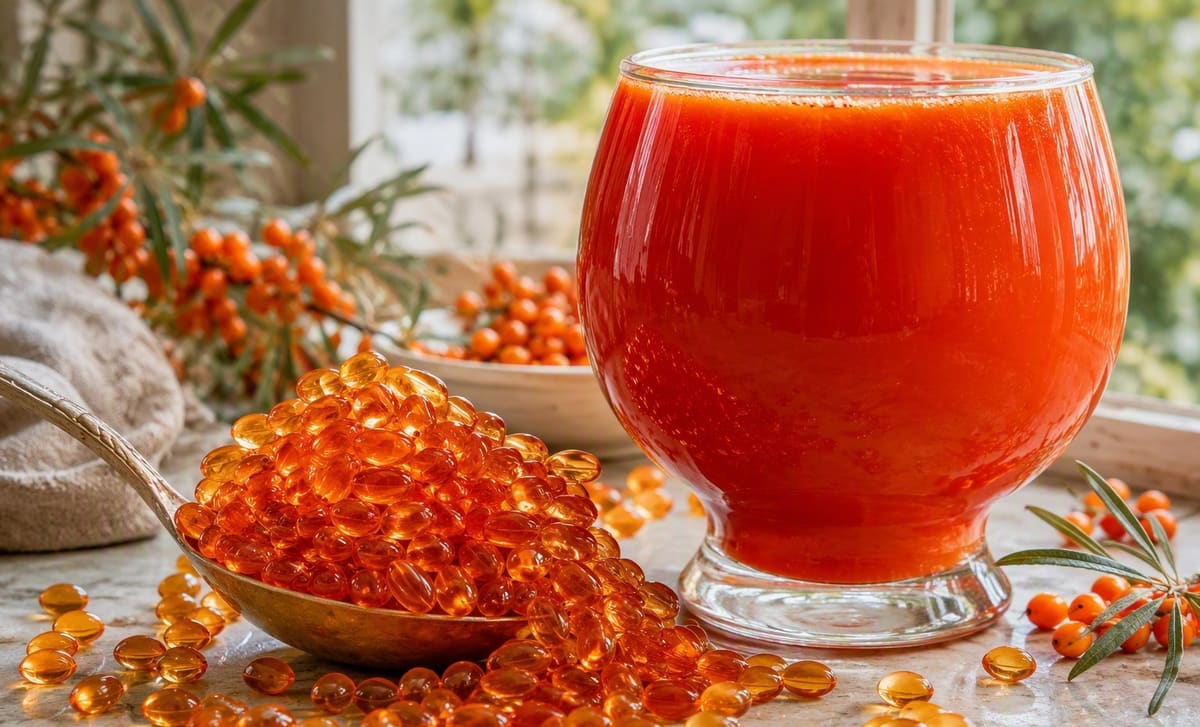
No acute toxicity has been documented for sea buckthorn at any tested dose. The highest dose ever studied, 5 grams of berry oil daily for four weeks, caused no serious harm, though it did measurably reduce platelet aggregation. Real-world “too much” usually means digestive upset, a platelet caution that grows with dose, and, at very high intakes, an orange tint to the skin that is harmless and reversible.
What too much looks like
The likely outcomes of a big dose are gastrointestinal: loose stools, nausea, and a heavy feeling, because oil is fat and a fat load is a fat load. For juice, add heartburn and stomach irritation from the acidity. These are uncomfortable, not dangerous, and they pass. Timing is the other variable: the same amount taken all at once hits harder than split across meals, which is why the trials split theirs, and why the big single pour is the version that produces the memorable afternoon. None of it belongs in the same category as the documented cautions on the safety overview.
Why the stomach complains first
The mechanism is boring and mechanical. Oil is fat, and a fat load arriving faster than your digestion expects it produces the classic response: nausea, loose stools, a heavy stomach. Juice adds an acid load on top, which is heartburn and irritation for anyone prone to them. Both effects scale with dose and stop when the dose stops, which is what “uncomfortable, not dangerous” means in practice. Taking the oil with food, as the trials did, is the difference between noticing nothing and noticing plenty.
The ceiling logic
The studied doses run 1 to 3 grams of oil a day. The 5-gram study is why we treat 3 grams as the sensible daily ceiling: above it sits a real antiplatelet effect from a small sample, and beyond it sits nothing, because long-term high-dose use is unstudied. Most people never count their actual grams, which is the quiet reason accidental overdoing happens at all, and the capsules guide is where we score the labels that print milligrams of oil per softgel. The dosage page has the full dose map, and the study dosages page shows where every benefit was measured.
The pattern that actually deserves caution
A single big day is a stomachache. The pattern worth avoiding is sustained intake well above studied territory: 6, 8, 10 grams daily for weeks or months. That zone is doubly unstudied, and it is where the platelet signal from the 5-gram study stops being a footnote, because the effect plausibly grows with dose while the benefits do not. Every measured benefit in the literature arrived at 3 grams a day or less. More oil past that point buys risk without buying anything. If a label or a protocol suggests more than 5 grams a day, that suggestion has left the evidence entirely, and the platelet study is the only data point waiting up there.
The orange-skin footnote
Berry oil is loaded with carotenoids. Sustained high intake of carotenoid-rich foods can tint skin yellow-orange, a harmless and reversible effect long documented for carrots and their kin. Sea buckthorn at supplement doses is unlikely to get you there, but a juice-and-oil enthusiast at heavy daily amounts could notice a glow.
The tint has a name, carotenoderma, and a logic: carotenoids are fat soluble, so a sustained surplus deposits in the outer skin layers, most visibly on palms and soles. It fades over weeks once intake drops, it does not touch the liver, and it is the body advertising the dose. If your palms turn pumpkin, that is the feedback, and the fix is eating less of the orange things, all of them, for a while.
The child scenario, specifically
The bottle a toddler opens is the commonest real-world version of this page. Sea buckthorn oil is not toxic in the way medications are, but any child who swallowed an unknown amount of anything gets the same protocol: US Poison Control at 1-800-222-1222, bottle in hand, child watched. The children page covers prevention, which is storage, and why gummies get treated like medicine.
What to do
Stop taking it and hydrate. Mild symptoms resolve on their own. If a child swallows a bottle of oil or a handful of softgels, call US Poison Control at 1-800-222-1222 (free, staffed around the clock) with the bottle in hand. Severe symptoms, or anyone with breathing trouble, means emergency care. Blood thinner users who overdid the oil should mention it to their doctor, per the blood thinners page. Either way, keep the bottle and note the dose, because that is what makes a report to anyone useful.
The line between uncomfortable and call-the-doctor
Uncomfortable: nausea, loose stools, heartburn, orange tint. Those resolve with rest, water, and a smaller dose tomorrow. Call-the-doctor: vomiting that does not stop, signs of unusual bleeding if you are on blood thinners (the blood thinners page has the watch list), any symptom that feels out of proportion, or any symptom in a child. Bring the bottle to the visit or the phone call, because the label answers the clinician’s first three questions for you. The how much daily guide keeps tomorrow’s routine inside studied lines, and the safety review keeps the tolerability record behind them.
Frequently asked questions
What happens if you take too much sea buckthorn oil?
Most likely, digestive upset: nausea and loose stools that pass on their own. No acute toxicity has been documented at any tested dose. Sustained intake above 3 grams daily enters unstudied territory with a real antiplatelet signal at 5 grams, so too much is a dose pattern, not a single bad day.
Can sea buckthorn damage my liver or kidneys?
No such signal exists in the human trials at studied doses of 1 to 3 grams daily over three months, and traditional food use adds no hint of it. The honest boundary is the usual one: sustained high-dose use above studied territory is unmapped, which is why the ceiling guidance exists. Anyone with an existing liver or kidney diagnosis should run any supplement past their specialist first.