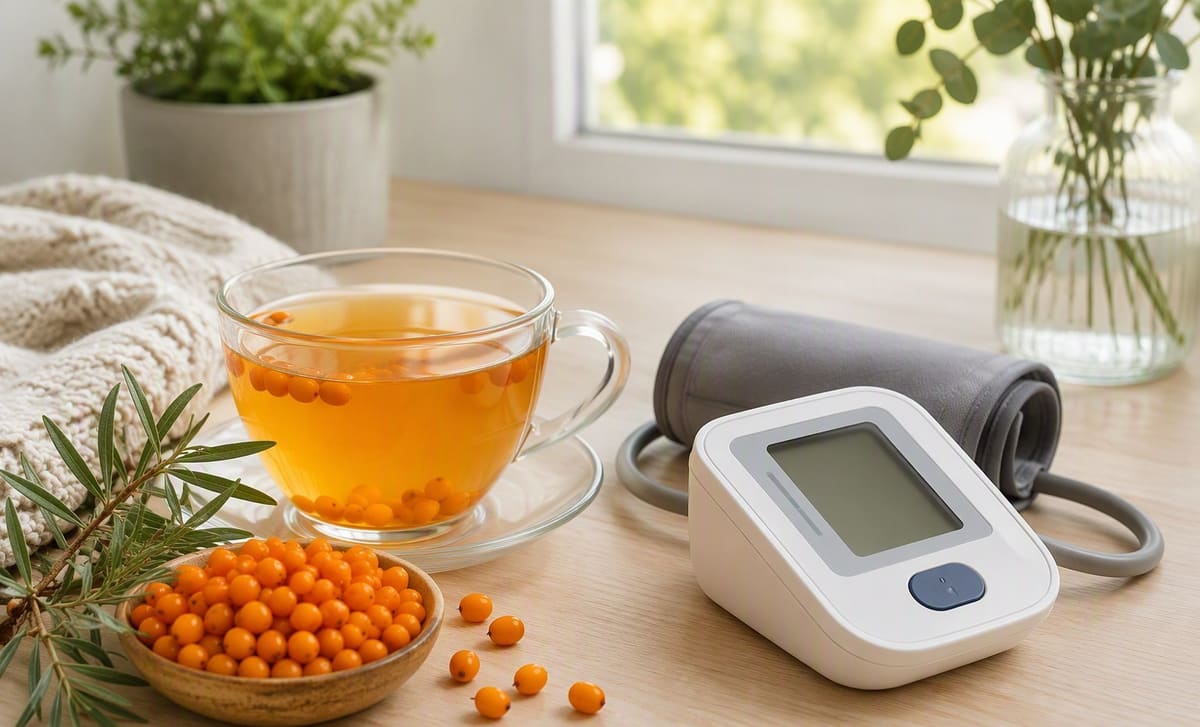
There is no good evidence that sea buckthorn lowers blood pressure in anyone. The single trial that said otherwise was retracted in 2026, and a 15-trial meta-analysis found no significant effect at all. So if your pressure already runs low, there is no documented pressure-lowering effect here to stack on top of it. Monitor how you feel anyway, and if you take blood pressure medication, make it a doctor conversation.
What the evidence says now
The only reduction signal ever recorded for sea buckthorn came from a controlled trial in hypertensive subjects taking seed oil. Clinical Nutrition retracted that trial in 2026, and the signal went with it. What remains is a 2022 meta-analysis of 15 randomized trials, which found no significant blood pressure effect across the board.
That is a shorter story than this page used to tell. There is no evidence sea buckthorn pushes healthy pressure downward, and no credible evidence left that it lowers high pressure either. We never claimed blood pressure lowering as a benefit, because the larger analysis found none, and the retraction is why that caution aged well. The cholesterol meta-analysis is where the 15-trial null lives, and the other side-effect cautions sit together on the safety home.
What happened to the hypertensive trial
The positive result came from a controlled trial that gave sea buckthorn seed oil, specifically the seed oil, to adults with hypertension and tracked cardiovascular risk factors. Their pressure moved down toward normal. That paper no longer stands. Elsevier retracted it in 2026 at the request of the journal’s Editor-in-Chief and Ethics Editor, who found duplicated images across figures that the corresponding author could not account for. The retraction notice runs in Clinical Nutrition volume 59, article 106600, and PubMed now tags the original as a retracted publication.
That matters more on a safety page than it first looks. This trial was the entire reason anyone asked whether sea buckthorn could drop pressure too far. Take the trial away and the question loses its source. Full detail on the blood pressure page.
Reading it honestly
One retracted trial plus a 15-trial null across everyone adds up to a boring, useful conclusion: sea buckthorn is not a blood pressure drug in either direction. Where pressure was high, the trial that claimed help has been withdrawn. Where it was normal, pooled trials saw no push downward. For someone whose pressure runs low, that pattern is more reassuring than it was a year ago, without being a guarantee, because “no significant effect in pooled data” and “no effect in you” are different sentences, and your baseline is lower than anyone’s in those trials.
What “low” means in practice
Low pressure has no single definition, but the symptoms are what matter day to day: the head rush on standing, the occasional gray moment after a long still sit, the fatigue some people feel at the bottom of their range. Plenty of people live at the low end with zero symptoms, and for them this whole page is a formality. The caution belongs to the symptomatic, the medicated, and anyone who has fainted before.
If your pressure runs low
The stacking question is the generic one: a supplement with any pressure-lowering tendency plus a naturally low baseline could add up to lightheadedness, especially on standing. Nobody has documented that for sea buckthorn, and the one paper that suggested the tendency has been retracted, so this stays a watch-and-note habit rather than a rule. Try the supplement for a couple of weeks, notice whether standing up brings a head rush, and stop if it does. Seed oil and berry oil differ in plenty of ways, laid out in the seed vs berry breakdown, but blood pressure is no longer one of them.
The practical self-check
If you own a cuff, measure seated after five quiet minutes, once before starting and a few times across the first two weeks. The numbers matter less than the trend and the symptoms. Standing up slowly during the first weeks costs nothing. Skip the supplement on days you feel off, and write down anything odd, because a note beats a memory at the doctor’s office. None of this is alarm protocol. It is the ordinary way to introduce anything new when your baseline sits at the edge. Morning readings, before coffee and before the supplement, are the most comparable day to day.
Signs that mean call the doctor
Fainting or a near-faint, a fall, dizziness that persists through the day, or a racing heart that arrives with the lightheadedness: these are the symptoms that stop being supplement questions and become medical ones, whether or not sea buckthorn is involved. Bring the bottle to that visit. And if you take blood pressure medication and notice your readings trending lower than usual after starting the oil, that trend is worth a call, because doses get adjusted for exactly this kind of drift. A single low reading without symptoms is a note, not a call.
If you are medicated
Blood pressure medication changes the math in both directions. The drug interactions page explains the additive-effect logic, and your prescriber beats any page on this site. The dosage page keeps amounts inside studied territory, which is where all of this evidence lives. The safety review collects the tolerability data those amounts come from.
Medicated pressure management is calibrated chemistry: your prescriber picked doses against your readings. Anything new with even a theoretical pressure effect belongs on their radar, not because sea buckthorn is strong, but because the system they built is tuned. Most readers in this situation get a green light with a monitoring note attached.
Frequently asked questions
Can sea buckthorn lower blood pressure too much?
There is no evidence of that in anyone. The one trial that reported reductions, Vashishtha 2017 in hypertensive adults, was retracted by Clinical Nutrition in 2026 over image duplication in its figures. A 15-trial meta-analysis found no significant blood pressure effect at all. That leaves no documented pressure-lowering effect to stack on a low baseline. If your pressure runs low, monitor how you feel on standing, and involve your doctor if you take any blood pressure medication.
Should I avoid sea buckthorn if my blood pressure is naturally low?
There is no documented need to avoid it: pooled trials found no pressure-lowering effect overall. The practical approach is the monitored one: start at the low end of studied doses, notice how you feel on standing for the first two weeks, and loop in your doctor if you take any blood pressure medication or have fainted before.