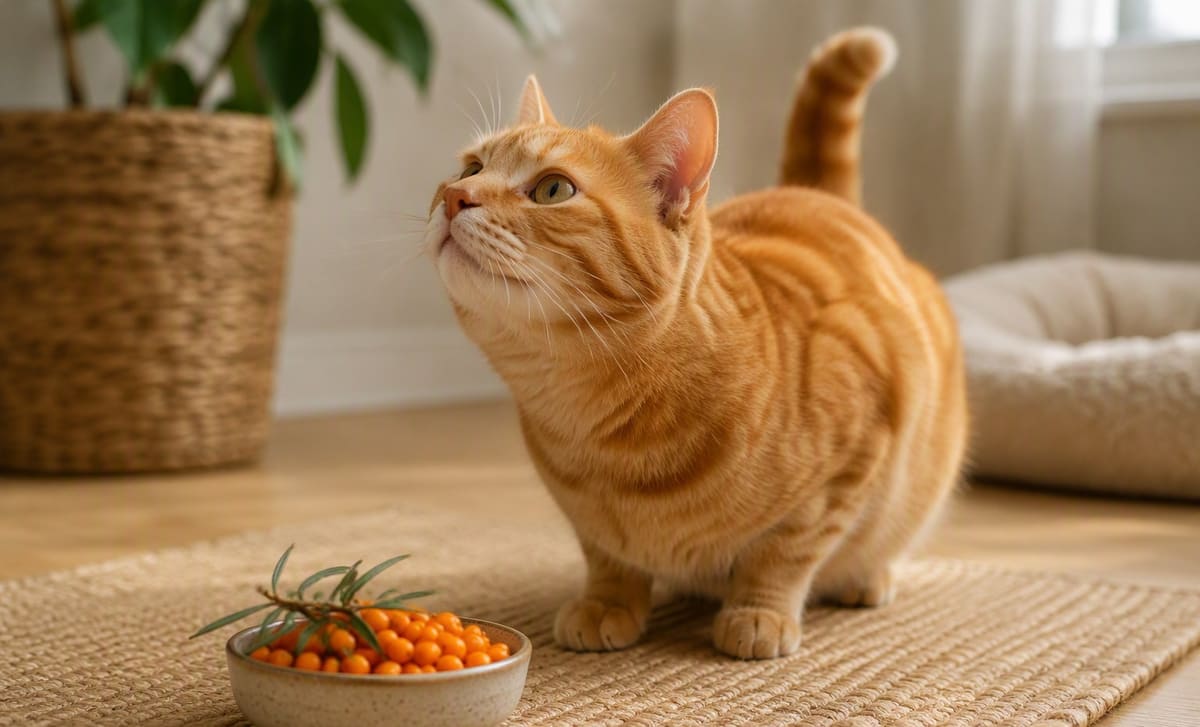
There is no sea buckthorn data for cats at all: no veterinary trial, no studied dose, no safety record. Cats are obligate carnivores whose fat metabolism differs from both humans and dogs, so the human evidence transfers even less than usual. The honest position is the cautious one: keep the supplements for the humans, and ask your vet before anything deliberate.
Why cats are a special case
Obligate carnivore metabolism is built around animal tissue, not plant material. Compounds a human liver handles easily can be slow work for a feline one. The pet-safety culture around concentrated plant products (essential oils being the famous example) exists for this reason, and berry oils sit in the same concentrated-plant bucket, even though sea buckthorn oil is a fixed oil, not an essential oil. Everything on our safety overview was measured in people, and none of it carries across to a cat.
The fixed-oil versus essential-oil distinction matters for panic calibration. Sea buckthorn oil is a pressed or CO2-extracted fatty oil, chemically closer to olive oil than to the volatile essential oils that genuinely trouble cats. That lowers the alarm level for a lick or a spill. It does not create a studied dose, which is the part that matters for anything deliberate.
What veterinarians generally say about oils
Ask a vet about plant oils for cats and the answer is usually math plus caution. The math: a teaspoon of any oil runs roughly 40 calories, and a typical indoor cat eats around 200 to 250 calories a day, so one teaspoon is a fifth of the day’s intake with no protein attached. The caution: cats with a history of pancreatitis or digestive trouble handle fat loads poorly, and a sudden oily addition is a classic trigger for an uncomfortable cat.
None of this makes a lick of oil dangerous for a healthy cat. It makes a daily measured supplement something a vet should size, because the right amount for a 5-kilogram cat is a fraction of anything a human label suggests. Kittens, seniors, and cats with any diagnosis sit in the extra-caution tier by default: smaller bodies or smaller margins, less studied everything, and a vet who should hear about any new food before it happens.
The grooming multiplier
Anything put on a cat ends up in the cat. Topical products become oral doses within minutes, which is why the “just a little on the fur” idea fails for cats in a way it does not for dogs.
Symptoms that mean call the vet
If a cat got into a sea buckthorn product, or an experiment went wrong, the watch list is digestive: vomiting, diarrhea, a greasy or dull coat, appetite loss, unusual lethargy. Any of those after access to an oil bottle means a vet call with the label in hand. Repeated vomiting or a hunched, uncomfortable posture skips the call and goes straight to the visit, because those are the classic signs a cat’s pancreas is unhappy.
The never-medicate line
Human supplements are dosed for humans. Scaling a capsule down by body weight sounds scientific and is not, because cats handle plant compounds through different liver pathways than either humans or dogs, and nobody has mapped those pathways for sea buckthorn. The rule that covers every bottle on your shelf: never give a cat a human supplement unless your vet specifically told you to, at a dose they specifically chose. If a product is marketed specifically for cats, the same question applies in reverse: where is the feline study behind it.
What “no data” actually means
Pet supplement pages love the phrase “no known toxicity,” which is true here and nearly meaningless. It means nobody has reported a poisoning, which for an uncommonly used supplement says little either way. The honest reading for cats: the risk is probably low for trace exposures, unquantified for anything deliberate, and not worth experimenting on an animal that cannot tell you how it feels. That is why every route on this page ends at the same place, your vet’s office.
Practical rules
Berries are not cat food, and most cats will decline the offer anyway. Keep oil bottles and softgels stored away, because a punctured softgel is an interesting smell and a needless experiment. If your cat gets into a sea buckthorn product, call your vet or a pet poison line with the label in hand. For cats, your vet is the entire evidence base.
One more scenario deserves a plan: the punctured softgel. A cat that bites into one gets a mouthful of oil, which is a mess and a mild digestive experiment, not an emergency. Wipe what you can, expect soft stools, and call the vet if anything beyond that shows up. The bigger bottle incident, a cat that ate several softgels, earns the call immediately. The pets overview covers the sharing question across the site, and the dogs page is the comparatively data-rich neighbor.
Frequently asked questions
Can cats have sea buckthorn?
There is no research either way: no veterinary studies exist at all. Sea buckthorn is not on the familiar lists of cat toxins, but unstudied is not the same as safe for an obligate carnivore. Keep supplements and oils out of reach, and ask your vet before any deliberate use.
Can I put sea buckthorn oil on my cat's skin or fur?
Not without your vet's agreement. Whatever goes on a cat gets groomed off and swallowed within minutes, so topical use is really oral use with extra steps, and no studied dose exists for either. If your vet suggests an oil for a skin issue, use the product and amount they choose.