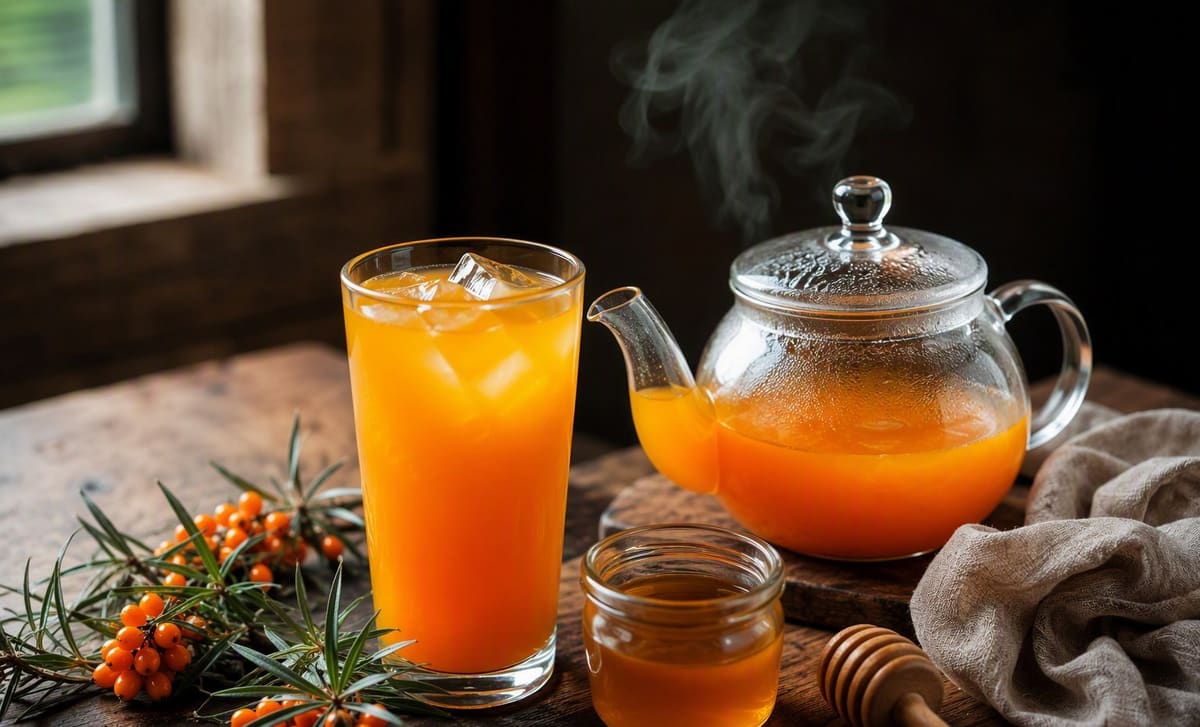
Two sea buckthorn juice recipes cover the year: a cold diluted breakfast glass and a warm spiced pot for winter. Both obey the one rule that protects your enamel and your stomach: never drink this juice undiluted. Start from homemade juice or a good store bottle, and each takes under ten minutes.
Making your own base juice first? The full method, from crushing to straining, is on the make juice guide. These two recipes start where that one ends, and the rest of the collection sits on the recipes hub.
Recipe 1: the breakfast glass
Prep: 2 minutes. Yield: 1 glass.
- 60 ml sea buckthorn juice (homemade or store-bought, unsweetened)
- 180 ml cold water
- 1 to 2 teaspoons honey, to taste
- Ice, optional
- Pour the juice into a glass.
- Add the water, the 1:3 dilution that makes it drinkable.
- Stir in the honey until dissolved, add ice if you like, and drink it alongside breakfast rather than before it.
The 1:3 ratio is a starting point, not a law. Some palates want 1:4, and nobody wins a prize for drinking it stronger.
Recipe 2: the warm spiced pot
Prep: 8 minutes. Yield: 2 mugs.
- 120 ml sea buckthorn juice
- 300 ml water
- 1 cinnamon stick
- 2 thin slices of fresh ginger
- 1 to 2 tablespoons honey
- A strip of orange peel, optional
- Warm the water with the cinnamon and ginger until steaming, not boiling.
- Take the pot off the heat and stir in the juice. Adding it off the boil keeps more of the vitamin C that heat slowly destroys.
- Sweeten, strain into mugs, and drink warm.
The apple-carrot stretch
For a glass that needs no added honey, mix 60 ml of sea buckthorn juice with 240 ml of fresh apple or apple-carrot juice and skip the water entirely. The fruit sugars meet the acidity halfway, the color turns pure sunset, and this is the version kids accept without negotiation. Fresh-pressed apple oxidizes brown within the hour, so mix it when you pour it, not before.
Troubleshooting
- Still too sharp at 1:3. Go to 1:4, add the honey, and serve it colder. Cold mutes acid perception, which is why the winter pot can carry a ratio the summer glass cannot.
- It separates in the glass. Juice is a suspension, not a solution. Shake the bottle before measuring and stir before sipping.
- Orange stains everywhere. That is the carotenoids, the same pigments that tint skin with heavy use. Wipe immediately, cold water first, and keep the bottle away from light fabrics.
- Your stomach grumbles. Acid on an empty stomach is the cause. Move the glass to alongside the meal, not before it.
What the juice loves
The pairing logic runs three ways, and you can improvise from it. Fat softens the sourness, which is why the smoothie recipes lean on yogurt. Sweetness balances it, which is the honey dial in both recipes above. Bubbles lift it, which is the whole design of the mocktail spritz. Ginger, apple, carrot, orange, and cinnamon all flatter the berry, so build variations from that list and you will not go wrong.
The acid rules, every single time
Undiluted sea buckthorn juice carries malic, quinic, and citric acids at levels that erode enamel and grumble empty stomachs. Dilute, drink with food, rinse your mouth with plain water afterward, and wait thirty minutes before brushing. The safety page explains the reasoning, and the vitamin C page covers what survives into the glass.
Storage: the base juice keeps three to four days refrigerated in a sealed bottle, longer frozen in portions. Mixed drinks are best made fresh. If juicing feels like too much work, the juice page covers the store category and the juice buying guide names the two unsweetened bottles that passed our label checks.
Frequently asked questions
Can you drink sea buckthorn juice every day?
As a food, yes, in normal portions. A diluted glass a day fits ordinary eating patterns. The rules that matter are about acid, not dose: dilute it, drink it with food rather than on an empty stomach, and rinse your mouth with plain water afterward.
Is store-bought sea buckthorn juice as good as homemade?
Unsweetened 100 percent juice is the same raw material, so read the label for two things: no added sugar, and the word juice rather than nectar, since nectars are pre-diluted with water and sugar. Homemade wins on freshness and price per bottle only if you have berries to spare.