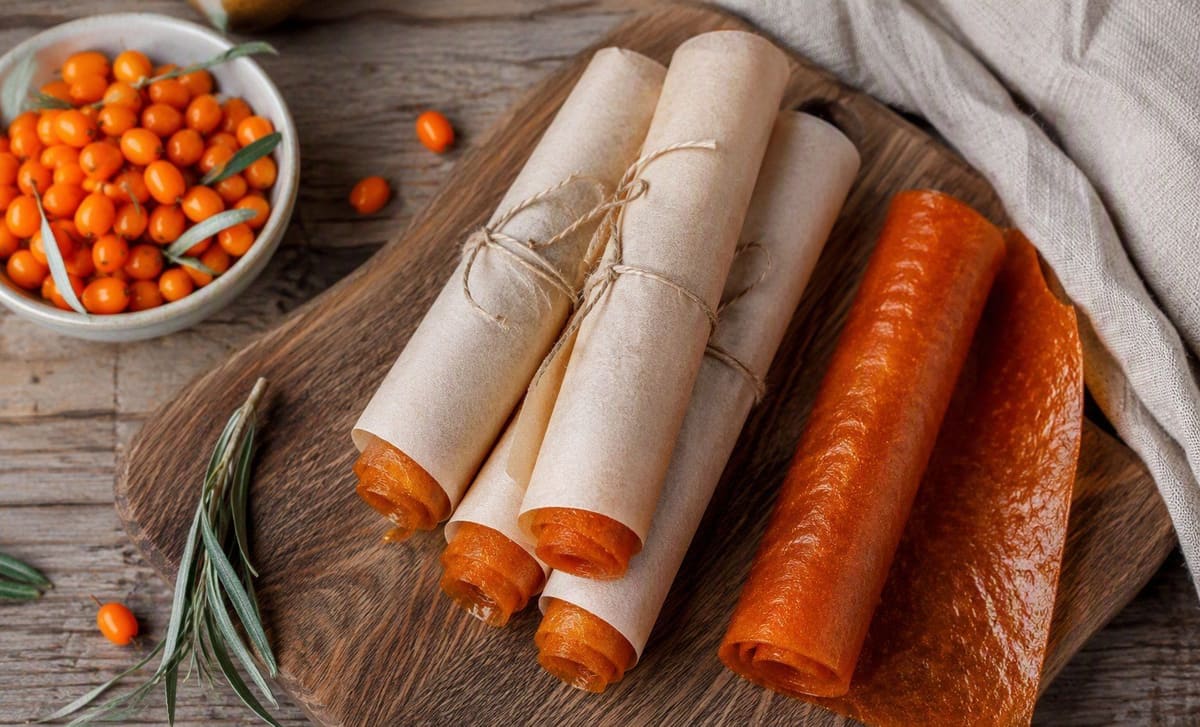
Sea buckthorn fruit leather is the slowest easy recipe on this site: simmer, blend, strain, spread, then let a low oven do four to six hours of unattended work. The result is a chewy, sour-sweet strip that survives lunchboxes and wins over kids who would never eat the raw berry.
Nothing else on the recipes hub asks for so little attention over so many hours.
Prep: 20 minutes. Dry: 4 to 6 hours. Yield: one baking tray, about 10 strips.
Ingredients
- 400 g sea buckthorn berries, fresh or frozen
- 60 ml water
- 1 to 2 tablespoons honey (20 to 40 g), to taste
The method
- Simmer the berries with the water for 5 minutes, until they burst.
- Blend smooth, then strain out the skins and seeds. You want about 300 ml of puree.
- Stir in the honey while the puree is warm, taste, and adjust. It should still be tart.
- Spread 3 to 4 mm thick on a parchment-lined tray. Even thickness dries evenly, so take the extra minute here.
- Dry at 60 to 70°C with the oven door slightly ajar, 4 to 6 hours, until the surface is tacky but not wet. A dehydrator does the same job at the same temperature.
- Cool, cut into strips, and roll each strip in parchment.
The apple-blend variation
For a gentler, cheaper tray, simmer 300 g of berries with 2 grated apples (about 300 g) instead of the water, then blend and strain as usual. The apple brings body and natural pectin, softens the sourness a full notch, and stretches an expensive berry haul. Honey usually becomes optional here. This is the version for sour-shy kids and first attempts, and it dries about an hour faster because the puree starts thicker. Pear swaps in for the apple at the same weights, and room-temperature strips from any batch firm up a notch by day two, while fridge strips stay softer and chewier. In a humid kitchen, start with the fridge from day one.
Troubleshooting
- It sticks to the parchment. Underdried. Back into the oven it goes, checking every 30 minutes. Next time test the center of the tray, not the fast-drying edges.
- It cracked into brittle shards. Overdried. Brush the surface lightly with water, cover, and rest it for an hour to soften back, or accept sea buckthorn chips, which are honestly delicious over yogurt.
- Edges dry, middle wet. The spread was uneven, and the 3 to 4 mm even layer is the whole skill of this recipe. Rotate the tray every hour or two to help.
- The strips fused into one sheet. Cut with kitchen scissors rather than a knife, straight through the parchment, and roll as you go. Scissors are the right tool for the whole job.
- Mold appeared within days. Underdried leather stored warm. Tacky is done, wet spots are not, and the container must be truly airtight.
The honesty section
Low, slow heat is kinder than a jam boil, but hours in a warm oven still cost some vitamin C. This is a snack, and a genuinely good one, not a supplement in disguise.
Storage and the kid angle
Airtight at room temperature for two weeks, longer in the fridge or freezer. For the freezer, pack the parchment-rolled strips in a bag for up to three months and thaw them inside the bag, so condensation lands on the plastic rather than the leather. For lunchboxes, cut shapes with scissors and let the kids do the rolling. The storage guide covers keeping the raw berry haul itself, and the frozen berries we’d reach for are how most people get one in the first place. Finding 400 g at all is the real cost of this recipe, and the buying channels guide covers which routes carry fruit rather than only oil. The jam recipe is the faster preserve, the desserts page is the no-wait option, the sorbet page is the other recipe that converts kids reliably, the and the cooking guide covers the heat rules.
Frequently asked questions
How long does homemade fruit leather keep?
About two weeks in an airtight container at room temperature, a month in the fridge, and several months in the freezer. Roll the strips in parchment so they do not stick together, and dry them fully: tacky is done, wet spots mean more time.
Can I make fruit leather without an oven?
A dehydrator does the identical job at the same 60 to 70 degrees, often more evenly. Sun-drying is the romantic option and rarely works with a puree this wet outside hot, dry climates. For most kitchens the low oven with the door ajar is the reliable default.