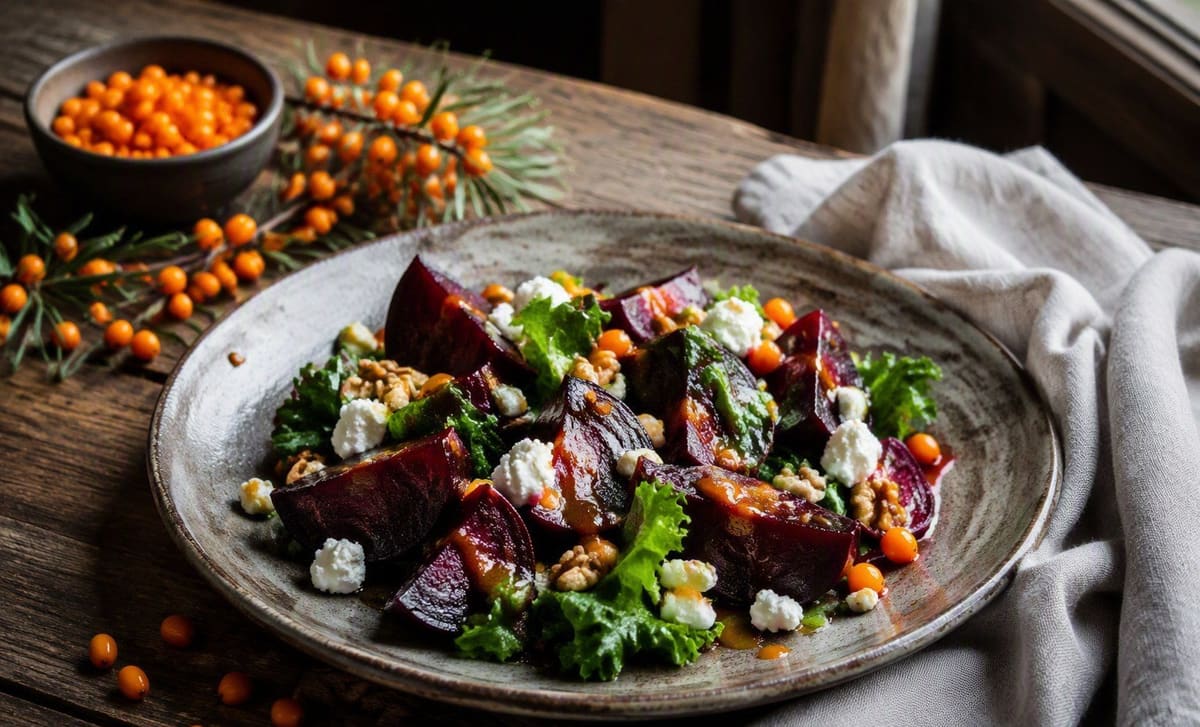
Sea buckthorn in salad works because acid loves fat: sharp berries against goat cheese, oily fish, nuts, and sweet roots. Four tested pairings here, from a dinner-party beet salad to a weekday grain bowl, all built on the same balancing rule.
This is the savory half of the recipes hub, and the half most people never think to try.
1. Beet, goat cheese, and walnut
- 3 cooked beets, wedged (about 300 g)
- 100 g soft goat cheese
- 40 g walnuts, toasted
- A handful of sturdy greens
- Sea buckthorn vinaigrette, about 45 ml (3 tablespoons)
Assemble, dress just before serving. The vinaigrette stands in for the usual balsamic, sharper and more orange.
2. Carrot-citrus slaw
- 300 g carrots, grated
- 1 orange, segmented
- 2 tablespoons dried sea buckthorn berries
- 20 ml sea buckthorn juice whisked with 40 ml olive oil and a pinch of salt
- 1 tablespoon sunflower seeds
Toss and rest ten minutes so the dried berries soften slightly. Keeps a day in the fridge and travels well.
3. The grain bowl
- 200 g cooked grains (barley, farro, or rice)
- 2 handfuls of greens
- 2 tablespoons dried sea buckthorn berries
- 60 g feta, crumbled
- Yogurt dressing, about 45 ml
The dried berries act like sour raisins, the feta answers with salt and fat, and lunch is done.
4. Smoked fish and potato
- 150 g smoked trout or mackerel, flaked
- 300 g boiled new potatoes, halved warm
- 2 handfuls of greens
- Yogurt dressing, about 45 ml
- Fresh dill if you have it
Toss the warm potatoes in the dressing first so they drink it in, then flake the fish over the top. Oily fish and sharp berries are the Scandinavian pairing this whole page leans on, and the potatoes turn it from a side into lunch.
The pairing rule
Notice the pattern? Every one of these follows the same rule: the berry brings the acid, something else brings fat or sweetness, and nobody eats a plain handful of raw berries. The sauce recipe applies the same logic to hot food, the cooking guide explains the rule in full.
Make-ahead and packed lunch rules
The slaw is the traveler: a full day in the fridge, happier after the rest. The grain bowl holds up dressed if the grains cooled before assembly, because warm grains wilt the greens. The beet salad dresses at the table or not at all.
For a lunchbox, pack the greens undressed and the dressing in a small jar, then combine them at the desk. Four hours of pre-dressed greens is a sad salad, and the fix costs one extra jar.
Troubleshooting
- Raw berries are too aggressive. Crush them into the dressing instead of scattering them, or switch to dried. Whole raw berries are the expert mode.
- Dried berries are too chewy. Soak them in the juice for ten minutes first. They plump and soften into the sour-raisin role.
- The salad wilted. Dressed too early. Two minutes before serving is the rule. Twenty minutes is a soup.
- Too sour overall. Add sweetness, not less berry: orange segments, grated apple, roasted beets, or a drizzle of infused honey in the dressing.
For kids, the slaw is the entry point, since sweet carrots and orange lead and the berries play background. The dried berries page covers the pantry form these salads lean on, and where sea buckthorn is actually sold lists the shops and sites that stock the fruit rather than only the oil.
Turning any of these into dinner
Each salad is one protein away from a full plate. The beet salad takes a sliced steak or a scoop of lentils. The slaw sits beside anything grilled. The grain bowl doubles its grains and adds a fried egg, whose yolk becomes part of the dressing. The fish and potato version already is dinner, which is why it earns the biggest bowl. The rule doesn’t change: the berry stays the acid, whatever joins it brings the richness.
Frequently asked questions
Can you put sea buckthorn berries in salad?
Yes, and they behave like a cross between a citrus segment and a sour raisin. Use dried berries in grain bowls and slaws, fresh or frozen berries crushed into dressings, and the juice in place of vinegar. Pair with fat and sweet vegetables so the sourness reads as brightness.
Do I need to cook the berries before they go in a salad?
No. Raw berries get crushed straight into dressings, dried berries go in as they are or with a quick soak, and the juice replaces vinegar directly. The salad route is the one that keeps the fresh vitamin C intact, since nothing sees heat. Save cooking for the warm sauce.