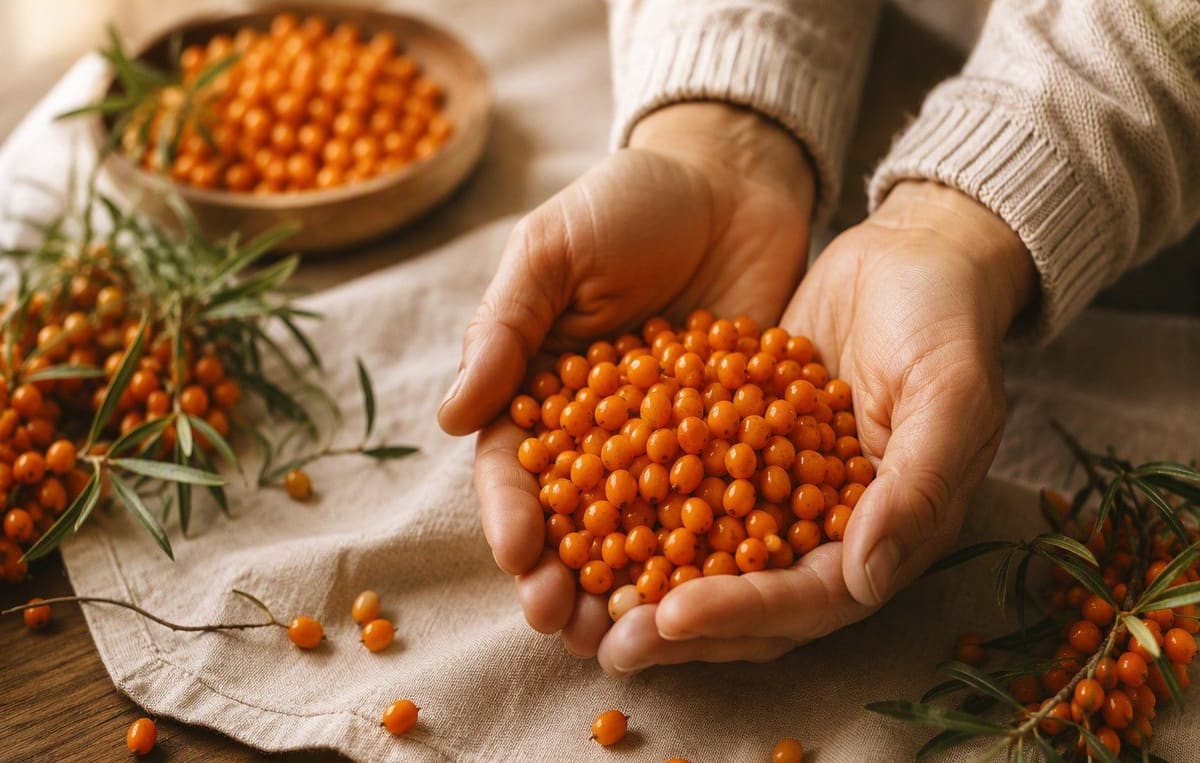
The claim: sea buckthorn supports lungs and respiratory health. What exists: traditional cough and throat use, plus one cold-prevention trial that came back negative. The verdict: unproven for anything respiratory, and asthma, COPD, and smokers’ lungs belong to medicine, not supplements.
Tradition versus the one trial
Tibetan and Mongolian medicine used sea buckthorn for coughs and throat complaints, which is where the respiratory reputation starts. The modern check on that tradition is the 2008 berries trial: about 250 healthy adults, 28 grams daily for three months, and no fewer colds or respiratory infections than placebo, with no milder symptoms either. The colds and flu page has the full account.
The claim in three tiers
Respiratory support lands in the bottom tier of the wider benefits list, with a twist: part of it has actually been tested and failed. Real evidence would be a human trial improving a respiratory outcome, and the one trial that came closest found nothing. Plausible would be an untested mechanism worth a trial. What mostly circulates is marketing: traditional cough use presented as modern validation. The grade is not hostile. It is what a tested negative plus tradition adds up to. The full trial file is on the clinical trials page.
What the null does not rule out
Precision about the negative trial keeps everyone honest. The 2008 study tested 28 grams of berries, a food dose, in healthy adults, over one cold season, and found no prevention of colds. It did not test concentrated oils, did not test people with existing lung conditions, and did not test treating a cough once sick. Could some other dose or population show something? Possibly, in the way anything untested possibly could. But the claim sellers actually make, eat this to avoid colds, is the version that was tested. That is how single trials should be read: narrow in scope, decisive within it. The immunity page holds that result at full weight.
The conditions that are not supplement questions
Asthma and COPD have proven controller and rescue treatments that prevent real harm, and delaying them for supplements is the dangerous kind of experiment. Smoke exposure, whether cigarettes or indoor cooking smoke, drives most chronic lung damage worldwide, and reducing exposure is the intervention with evidence. A persistent cough past a few weeks, coughing blood, or breathlessness at rest all warrant a doctor promptly. Timing rules worth memorizing: a cough that passes three weeks gets a visit even if it feels minor, because that is the line where infections should have cleared. Fever that will not break, chest pain with breathing, or new wheeze means prompt care, not a wait-and-see week. And for smokers, a cough that changes character, deeper, more frequent, or newly productive, is a direct instruction to get checked, not a thing to watch.
The exposure lever nobody buys
The biggest respiratory intervention available is not for sale. Tobacco smoke causes most chronic lung damage, and quitting at any age measurably slows it. Secondhand smoke in a child’s home counts as exposure too. Indoor cooking smoke, especially from solid fuels in poorly ventilated kitchens, does similar work worldwide and yields to ventilation and cleaner stoves. Workplace dusts and fumes deserve the same respect through masks and extraction. Vaccination against flu and pneumonia prevents the infections that tip damaged lungs into crisis. None of this fits in a capsule, which is why you will not see it advertised next to one.
The throat-comfort tradition, placed
The traditional use deserves fair placement. A warm sea buckthorn tea with honey soothes a raw throat the way any warm, slightly acidic, honeyed drink does, and that comfort is real even though the mechanism is ordinary. Soothing a throat is not shortening an illness, and the tradition never measured the difference because it could not. Keep the ritual if you enjoy it, but never let it delay the red-flag rules above. If you want a tin in the cupboard for winter, our tea roundup names no winner and explains why, which is worth knowing before you pay a wellness price for dried leaves. Our oral health page covers the one caution that travels with acidic drinks, and it applies to the tea version too. Comfort has value in a miserable week, as long as it keeps its proper name.
Where the berry honestly fits
As food with vitamin C, in the same category as any fruit, and as a pleasant traditional tea ingredient for a sore throat’s comfort. Comfort is not treatment. A warm honey drink has more cough-soothing evidence behind it than any supplement on this site, and honey itself has trial support for children over one year old. In a winter kitchen the berry earns its shelf space as food: tart, vitamin C rich, good in warm drinks. Frozen berries keep most of their vitamin C, which matters in January, and a freezer bag is the closest thing to fresh most kitchens can get. The benefits hub shows where its evidence is real, and respiratory claims are not on that list. The immunity hub maps the related evidence.
Frequently asked questions
Is sea buckthorn good for your lungs?
Unproven. Traditional cough and throat use exists, but the one controlled trial relevant to respiratory infections found sea buckthorn berries did not prevent colds or reduce their severity. Asthma, COPD, and smokers' lungs are medical territory with real treatments, not supplement ones.
Can sea buckthorn help a cough?
As comfort, yes: a warm sea buckthorn drink with honey soothes a raw throat like any warm honeyed drink, and honey itself has better cough evidence than any supplement. As treatment, no: the one controlled trial found berries did not prevent or lessen respiratory infections. A cough past three weeks, blood, breathlessness, or a changed smoker's cough means a doctor, not a tea.