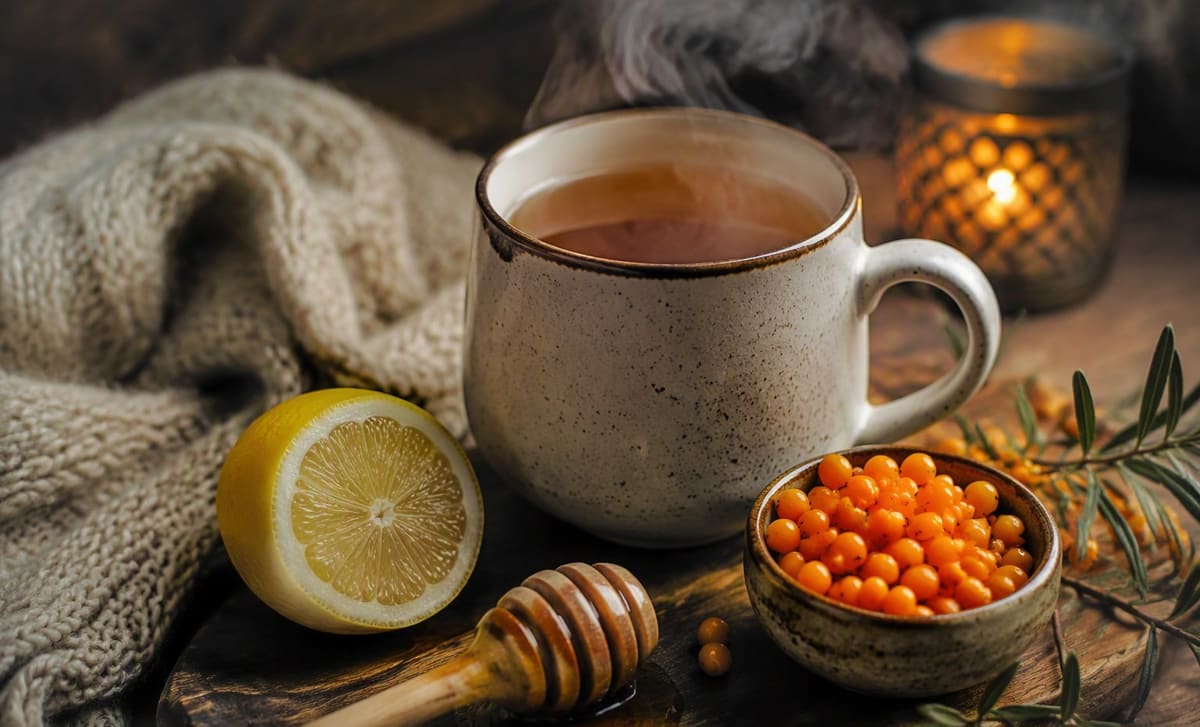
Sea buckthorn has been tested directly against colds exactly once, in a randomized, placebo-controlled trial of about 250 healthy adults. Three months of daily berries made no difference to catching colds or to how bad they were. That is the verdict, and it deserves to be the first thing you read on any page selling you winter immunity.
The trial, in full
Published in the European Journal of Clinical Nutrition in 2008, the study gave healthy adults 28 grams of sea buckthorn berry puree or a matching placebo every day for three months. That is a real food dose, roughly a small handful of berries, taken long enough to matter.
The results were clear on the questions buyers care about. The berry group did not catch fewer colds or other infections. Their colds were not milder or shorter. The one finding in sea buckthorn’s favor was a decrease in C-reactive protein, an inflammation marker, which the inflammation page covers on its own terms.
What that means for your winter
If a product page implies sea buckthorn will keep colds away, it is disagreeing with the only experiment ever run on the question. The boring winter fundamentals carry the actual evidence: sleep, hand washing, vaccines where recommended, and not training through an illness. None of those fits in a softgel.
The vitamin C angle, honestly
Sea buckthorn’s immunity reputation leans on vitamin C, and the berries are genuinely rich in it, roughly 200 to 600 mg per 100 grams fresh depending on species and origin. So what does vitamin C itself do for colds? The Cochrane Collaboration’s long-standing review of the trials found routine supplementation does not prevent colds in the general population, though it may shorten them slightly. That is established nutrition science, and it applies to vitamin C from berries exactly as it does to vitamin C from capsules.
In other words, the vitamin C in sea buckthorn counts the same way vitamin C from an orange counts: valuable daily nutrition, not a force field.
Where sea buckthorn still fits
As food, happily: the berries, juice, and powder are nutrient-dense and the inflammation signal is a pleasant bonus. If you want it as a daily drink for that reason, the juices we ranked highest sort the genuinely tart bottles from the sugar water. As a cold-prevention purchase, no. The immune system page separates the biology from the verdict, and the immunity hub maps the rest of the cluster. Anyone adding concentrated oil supplements for winter should skim the safety hub first.
The number the blogs skip
The trial reported infection rates as a ratio, and the ratio came out around 1.15 in the berry group. Statistically, that is indistinguishable from 1, meaning no difference at all. If anything, the point estimate leaned slightly toward more infections on berries, which is what chance looks like up close. Marketing pages that mention this trial at all quote the CRP finding and omit this number. Now you have both, and you can grade any page selling winter immunity by which half it prints.
The vitamin C dose math
Twenty-eight grams of fresh berries, the trial’s daily dose, carries roughly 60 to 170 mg of vitamin C depending on origin, since fresh fruit runs about 200 to 600 mg per 100 grams. That is a solid nutritional contribution, in the range the vitamin C trials themselves used. And the Cochrane verdict on doses like that is settled: routine vitamin C does not prevent colds in the general population, though it may trim a little duration. The vitamin C page covers the nutrient in full. Sea buckthorn’s vitamin C plays by the same rules as everyone else’s.
What actually moves winter risk
The interventions with human evidence are unglamorous. Sleep is the quiet giant: people sleeping short hours catch measurably more colds in controlled exposure studies. Hand washing works. Vaccines, where recommended, prevent the specific viruses they target rather than colds in general. Training through an illness turns a cold into a longer one. None of this sells in a bottle, which is exactly why the bottle keeps getting sold as an alternative to it.
Keeping the trial in perspective
One trial of about 250 people is the entire direct evidence base, and a larger trial could in principle find something small. That possibility does not change today’s purchase decision, because buyers act on the evidence that exists. Today the honest sentence is: tested once, properly, and it did not prevent colds.
Where this leaves the berries
In the kitchen, where they were always best: nutrient-dense, sharp, genuinely interesting food. Winter nutrition is a real thing. A winter force field is not, and no berry gets to be one.
If you catch one anyway
Rest, fluids, and patience remain the treatment, with a doctor’s visit for high fever, breathing trouble, or symptoms that drag past ten days. Antibiotics do nothing for viruses, and demanding them costs you and everyone else.
Frequently asked questions
Does sea buckthorn prevent colds?
No, at least not in the one trial that tested it. About 250 healthy adults took 28 grams of sea buckthorn berry puree or placebo daily for three months and caught the same number of colds at the same severity. An inflammation marker (CRP) did decrease. Enjoy the berries for nutrition, not as a cold shield.
Does vitamin C prevent colds?
For the general population, no. The Cochrane Collaboration's long-standing review of the vitamin C trials found routine supplementation does not prevent colds for most people, though it may shorten them slightly. Sea buckthorn's vitamin C follows the same rules as vitamin C from any source.