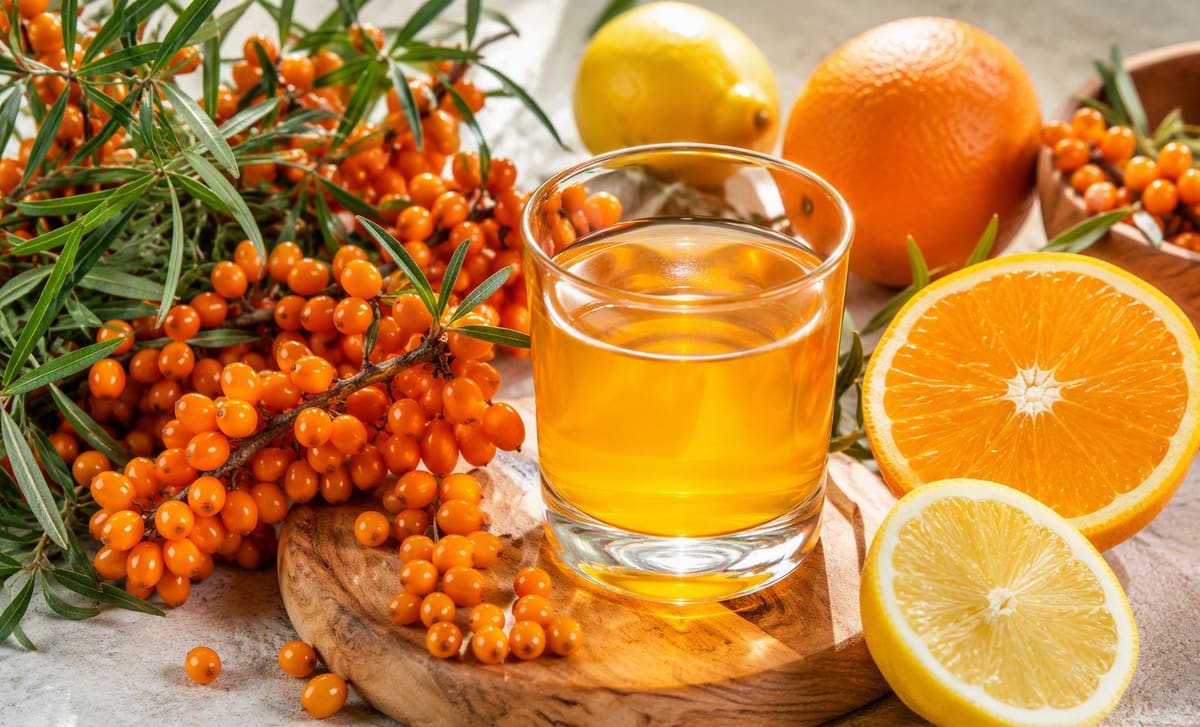
Tradition says sea buckthorn strengthens immunity. The one controlled trial that actually tested this found no effect on catching colds or on how bad they were, though an inflammation marker (CRP) did drop. Its vitamin C content does support normal immune function in the ordinary nutritional sense. Both things are true, and this page holds them side by side.
The trial that tested the claim
In 2008, Larmo and colleagues ran a double-blind, randomized, placebo-controlled trial in about 250 healthy adults. Half ate 28 grams of whole sea buckthorn berries daily for three months, right through cold season. The result: no difference in colds or other infections, and no difference in how severe they were.
That’s the best direct evidence we have, and it’s a null. One trial is never the final word. But it’s the only controlled human test of sea buckthorn against infections, and it didn’t find the effect tradition predicts. You can see where it sits among all human sea buckthorn studies on the clinical trials page, and where it sits among the graded claims on the benefits hub.
What a null does and doesn’t rule out
This trial says that 28 grams of berries a day, in healthy adults, over one cold season, didn’t prevent colds. It doesn’t say sea buckthorn could never affect any immune outcome in any group at any dose. One dose, one form, one population, one outcome window was tested.
Still, weigh it honestly. The exact claim people make, that eating these berries helps you dodge colds, is the claim that was tested. It failed. Broader rescue claims, the respiratory and lung-health pitch included, are speculation stacked on a negative result.
What did change: CRP
The same trial found that C-reactive protein, a blood marker of inflammation, decreased in the berry group. CRP is made by the liver in response to inflammation anywhere in the body, and doctors use it as a rough gauge of that background activity. A decrease sounds like a win, and biologically it may be.
But keep it in proportion. It’s a number on a lab report, nothing the participants could feel, and it didn’t translate into fewer infections during the study. A marker that moves without symptoms changing is a hint for future research, not a result for your life. The trial also found no effect on cholesterol or triglycerides at this food-level dose.
The vitamin C angle
Fresh sea buckthorn berries carry roughly 200 to 600 mg of vitamin C per 100 g, varying widely by species, origin, and harvest. Vitamin C has an established, ordinary role in normal immune function, the same role it plays coming from an orange, a bell pepper, or a kiwifruit. A 28 g serving delivers a meaningful amount. Ranges and sources are on our vitamin C page.
What this doesn’t mean: that eating sea buckthorn prevents colds. The trial supplying that vitamin C dose measured colds directly. No reduction.
Where the reputation comes from
Sea buckthorn has centuries of use in Tibetan and Mongolian medicine as a tonic for resilience. Traditional use is real information about safety and popularity across generations. It isn’t a controlled test, though. And when the controlled test finally happened, the headline claim didn’t hold.
Nobody has shown sea buckthorn raising any immune cell count, antibody level, or defense in people. That’s the middle tier that would change this page, and it’s empty.
If you catch every cold going around
The answer is rarely a berry. The common drivers are unglamorous: chronic sleep debt, sustained stress, smoking, and low vitamin D in winter all weaken defenses measurably. Fixing those moves the needle more than any supplement studied.
Frequent infections can also be a medical finding rather than bad luck. Severe infections, infections that need antibiotics repeatedly, or anything unusual form a pattern that deserves a doctor’s workup for underlying causes, from diabetes to immune deficiencies.
The sensible takeaway
Enjoy the berries as a tart, vitamin C rich fruit, not as a shield against colds. The habits with actual trial support for fewer respiratory infections are the boring ones: sleep, hand washing, vaccination, not smoking. For dosing and safety basics, see how much to take daily and is it safe, and sea buckthorn for colds and flu applies this standard to the seasonal version of the question.
Frequently asked questions
Does sea buckthorn boost your immune system?
Not in any tested sense. The one controlled trial (about 250 adults, 28 grams of berries daily for three months) found no reduction in colds or their severity. Its vitamin C content supports normal immune function the way vitamin C from any food does.
Can sea buckthorn help with inflammation?
Possibly, mildly. The same 2008 trial found C-reactive protein decreased in the berry group, an anti-inflammatory signal. That is one marker in one trial, not proof of a health effect you will feel.
Should I take sea buckthorn during cold season?
As food, fine. As cold prevention, the one controlled trial tested exactly that and found no effect on catching colds or their severity. The habits with real trial support are the boring ones, from enough sleep to vaccination to washing your hands. Enjoy the berries as a tart vitamin C source and let the boring habits do the protecting.