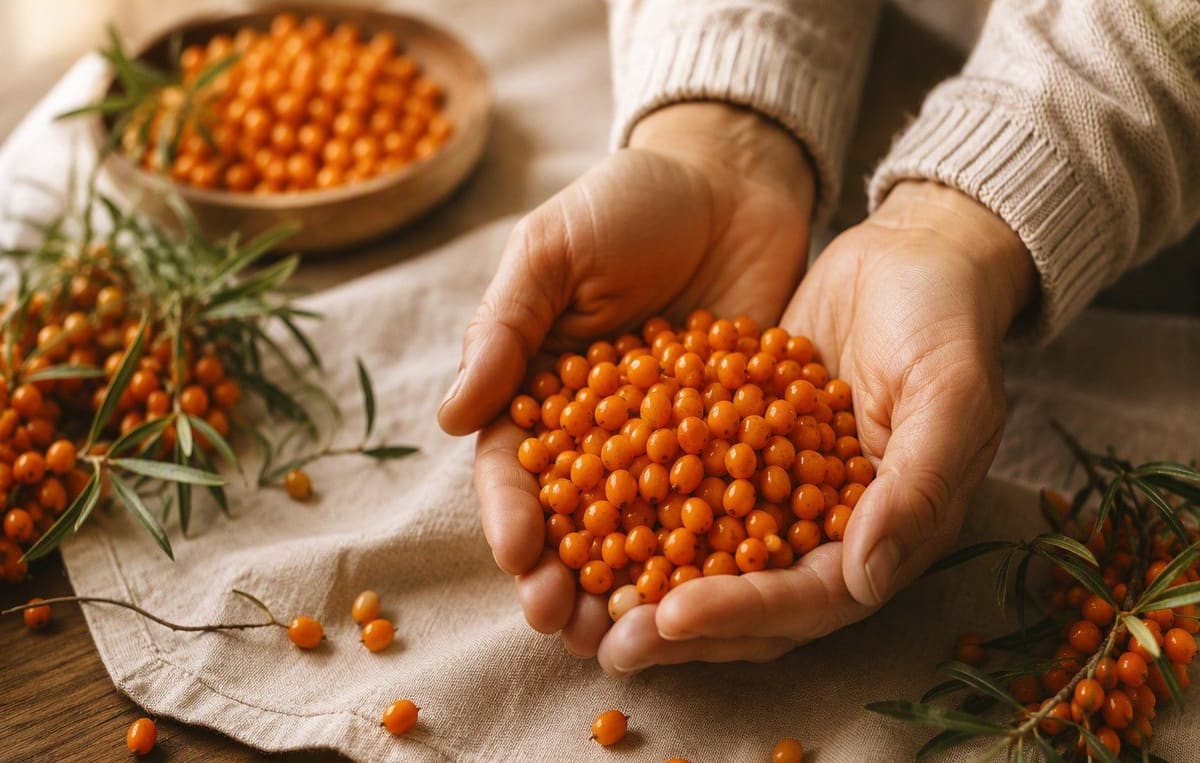
The question: if sea buckthorn is good for me, can I share it with my pet? The answer: vet-first, always, and the default is no until your vet says otherwise. No pet trials exist, and animal digestive systems are not small human ones.
Why sharing feels natural and is not
People who love a supplement want to share it with the animals they love. The impulse is kind and the biology is unkind: cats and dogs process compounds differently from humans, concentrated oils that are gentle for us can cause stomach upset in them, and the juice’s acidity is rougher on small systems. Even our human trials, like the three-month berries study, say nothing about animals at home.
The claim in three tiers
Pet benefits sit in the bottom tier of the long-tail benefit grades, one floor below even the human long tail. Real evidence would be a canine or feline trial, and none exists. Plausible would be borrowing human trials, but species differences break the loan. What remains is marketing: human study language printed on pet labels. The grade for pets is not unstudied-but-promising. It is simply unstudied. A canine trial could change this, and none is in the file.
The sharing scenarios, graded
Real life produces specific moments, so here they are one by one. A dropped berry or two eaten off the floor by a healthy dog: watch and relax, this is a food accident, not a poisoning. A few drops of oil licked from your fingers: same category. A deliberate daily supplement regimen for your dog: that is a veterinary decision, full stop, because daily concentrated oil in a small body is a different exposure than a floor berry. Cats are stricter still, being smaller with more particular metabolism, and the cats page explains why. One absolute: never share gummies or human chews with any pet, because xylitol, a common sweetener in them, is dangerous to dogs even in small amounts. Our gummies page is for humans only.
The pet-product label trap
Pet supplement labels borrow credibility the same way human ones do, with an extra step of audacity. A pet oil will cite sea buckthorn’s human skin research, a trial in adult women, as though beagle coats were in the study. There are no canine or feline sea buckthorn trials, so every benefit claim on every pet product is borrowed, extrapolated, or invented. The honest label would read: untested in your species. You will never see that label, which is why the vet conversation carries the entire weight.
Why the coat promise follows owners home
The number one pet claim is the shiny coat, borrowed from the human skin trials. Here is the borrowing problem in one sentence: 2 grams of oil daily in adult women says nothing about a beagle, because dose per body weight, skin biology, and study design all fail to transfer. What actually produces a glossy coat is unglamorous: a complete diet, freedom from parasites, managed allergies, and regular grooming. A dull coat that appears suddenly is worth a vet visit of its own, since it tracks thyroid, skin, and nutrition problems more reliably than it tracks supplement deficiency.
What the vet visit settles
Bring the actual product label, because dose and ingredients decide the answer. Your vet weighs three things a website cannot. First, your pet’s medications, since interactions are species-specific. Second, organ history, since liver or kidney disease shrinks safety margins. Third, life stage, since puppies, kittens, seniors, and pregnant animals all sit furthest from any data. A vet who says yes will also say how much and what to watch for. That specificity is the whole point of asking.
The detailed pages
We wrote species-specific safety pages for exactly this question. The dogs page and the cats page cover what is known, what is unknown, and the symptoms that mean call the vet now. They live in the safety cluster on purpose, because this is a safety question before it is a benefit one.
The one-line rule
Your vet knows your pet’s health, medications, and history, and no website including ours can replace that. Puppies, kittens, seniors, and pets with existing conditions sit even further from any safety data, which makes the vet question mandatory, not cautious. Dose scales with body weight too, and a ten-pound cat is not a small adult human. Bring the product label to the appointment if you want a real answer. The safety review covers what human studies report, which is the closest thing to data this question has. It says the products are generally tolerated in people, which is reassurance for you, not a prescription for them. Your pet’s dose, form, and go-ahead all come from the vet who can weigh the animal in front of them. The safety hub covers the human side.
Frequently asked questions
Can I give sea buckthorn to my dog or cat?
Ask your vet first, and treat the honest default as no until they say otherwise. There are no pet trials of sea buckthorn, animal digestive systems differ from ours, and the acidity and rich oils that affect people can hit pets harder. Our dog and cat safety pages have the detail.
My dog just ate sea buckthorn berries. What should I do?
First check what the product actually was: if it was a gummy or chew, read the label for xylitol immediately, and if present call your vet or a pet poison line now, since xylitol is dangerous to dogs in small amounts. Plain berries or oil in small quantity usually means watching for digestive upset over the next day. Repeated vomiting, refusal to eat, or a hunched, painful posture means the vet today.