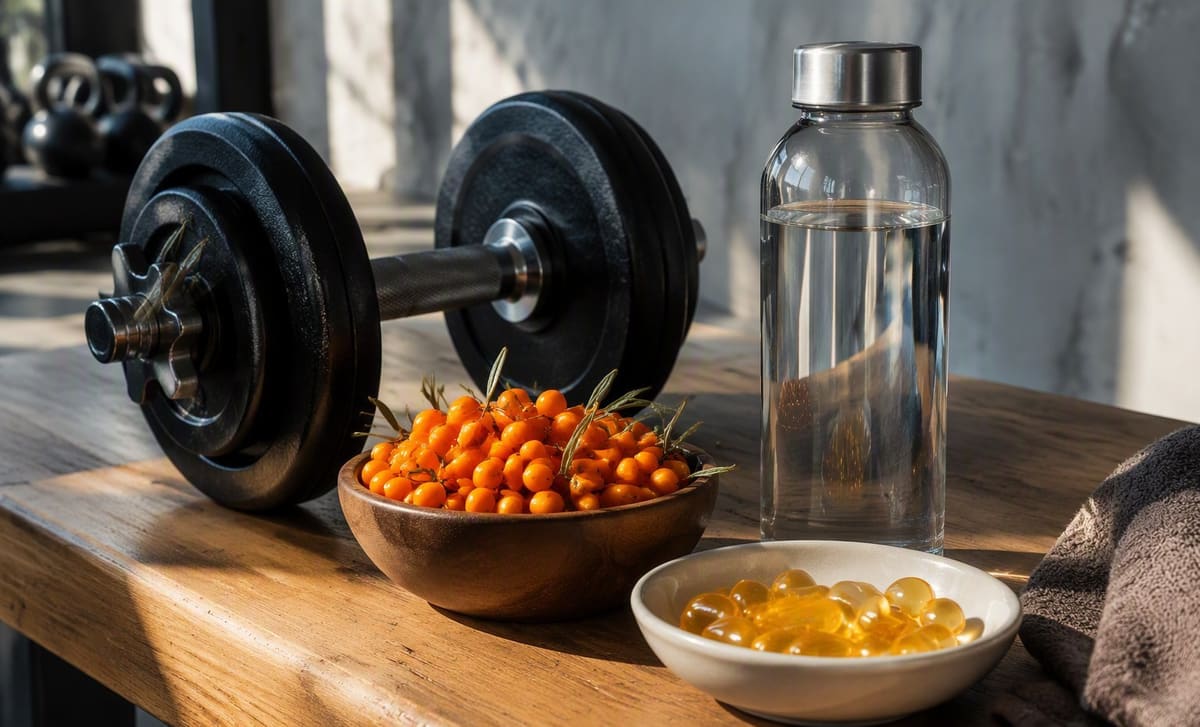
No sea buckthorn trial has measured testosterone. Not once. The “T-booster” framing attached to this oil is copied from a marketing playbook, not from data. The habits that genuinely move testosterone are sleep, strength training, and body composition, and clinical deficiency is a doctor’s diagnosis.
The T-booster playbook, annotated
It goes like this: list nutrients the body uses in hormone production, show the supplement contains them, imply more nutrients mean more hormone. Zinc and vitamin D appear in testosterone biology, so any food containing either gets the label. Sea buckthorn contains carotenoids and fatty acids, so it got the label too. The step that never happens is measuring testosterone in humans before and after. When that step is skipped, the claim is fiction with a bibliography. The booster industry survives because it never has to show a number. Demand one: any product claiming to raise testosterone should cite a human trial where testosterone was actually measured, and sea buckthorn has none. The men’s hub grades every male claim on exactly that demand.
The booster playbook, continued
Two more moves deserve names. The proprietary blend hides every ingredient amount behind a total weight, so the label can list impressive compounds at homeopathic doses and nobody can check. “Clinically studied” borrows credibility three ways: a studied ingredient is not a studied product, a studied product is not a studied outcome, and a studied outcome is rarely testosterone. A few booster ingredients do have small trials with mixed results, which is exactly why the blend exists: stir enough maybes together and the label sounds certain. The number to demand stays the same. Testosterone, measured in humans, before and after, against placebo.
The supplement shelf, graded
The usual booster ingredients, graded honestly. Zinc and vitamin D matter when you are deficient, and correcting a deficiency is not boosting. Tribulus has been tested repeatedly: libido reports move, testosterone does not. D-aspartic acid had a brief hype cycle, then larger studies found nothing. Fenugreek shows mixed small trials at best. Ashwagandha has a few small positive trials alongside quality questions. Notice the pattern: even the ingredients with actual studies show small, contested effects, and sea buckthorn sits below all of them with none. The shelf’s best case is “maybe, a little”, and its price tags assume you will not read this paragraph.
What actually moves testosterone
Decades of research point at the same unglamorous list. Sleep deprivation suppresses it measurably. Strength training supports it. Excess body fat lowers it, and weight loss in men with obesity raises it. Heavy alcohol suppresses it. None of these comes in a bottle, and all of them out-evidence every booster on the shelf.
The levers, ranked
Ranked by evidence and effect size, the list runs like this. Sleep first: men restricted to five hours a night in lab studies showed measurably lower testosterone within a week, and chronic short sleep is the most common self-inflicted hit. Strength training second, because regular resistance work supports both the hormone and everything it maintains. Waist size third, since fat tissue converts testosterone to estrogen and losing excess weight reverses that. Alcohol fourth: heavy use suppresses production directly, and cutting back recovers it. Food supports the whole project, and the nutrition hub covers the pattern, but no single ingredient, this berry included, moves the number. The athletic performance page ranks the training side of the same ledger.
When testosterone is a medical question
Low energy, low libido, low mood, and reduced morning erections together warrant morning blood tests, because clinical hypogonadism is real and treatable. A doctor measures twice before diagnosing, and treatment, when indicated, is prescription medicine with monitoring, the prostate included. The libido page covers the adjacent symptoms.
The blood test, demystified
The test is simple, and the rules around it matter. Testosterone peaks in the morning, so the draw happens before mid-morning. It also varies day to day, so guidelines call for two low readings on separate days before any diagnosis. Symptoms ride alongside the number, because a low reading without symptoms is a different situation than the same reading with them. When treatment is genuinely indicated, it is prescription therapy with real monitoring and real tradeoffs, including suppressed fertility while on it, which is why it is a doctor’s decision and never a self-prescribed one.
Symptoms versus the number
The symptom cluster matters as much as the lab value. One man can sit at the low edge of normal and feel fine, and another can sit mid-range with every symptom, because brains and bodies differ. That is why guidelines pair the two: persistent symptoms plus repeatedly low morning readings is the diagnosis, not either half alone. ED often travels with the cluster, and the ED page explains why that symptom earns its own vascular workup rather than a supplement.
The honest bottom line
Sea buckthorn is a reasonable supplement for the outcomes trials measured, which are lipids, dry eyes, and skin. Testosterone is not among them. Spend the booster budget on a gym habit and a bedtime.
Frequently asked questions
Does sea buckthorn boost testosterone?
No trial has measured testosterone in people taking sea buckthorn, so the claim has zero evidence behind it. What reliably influences testosterone: sleep, strength training, body composition, and limiting alcohol. Clinically low testosterone is a diagnosis made with morning blood tests, not a supplement aisle problem.
Can food raise testosterone?
No single food reliably raises testosterone, and that includes sea buckthorn. Overall pattern matters more than any ingredient: enough calories and protein, mostly whole foods, not too much alcohol. Severe restriction and heavy drinking both push testosterone down, which is one more reason the boring levers beat the booster shelf.