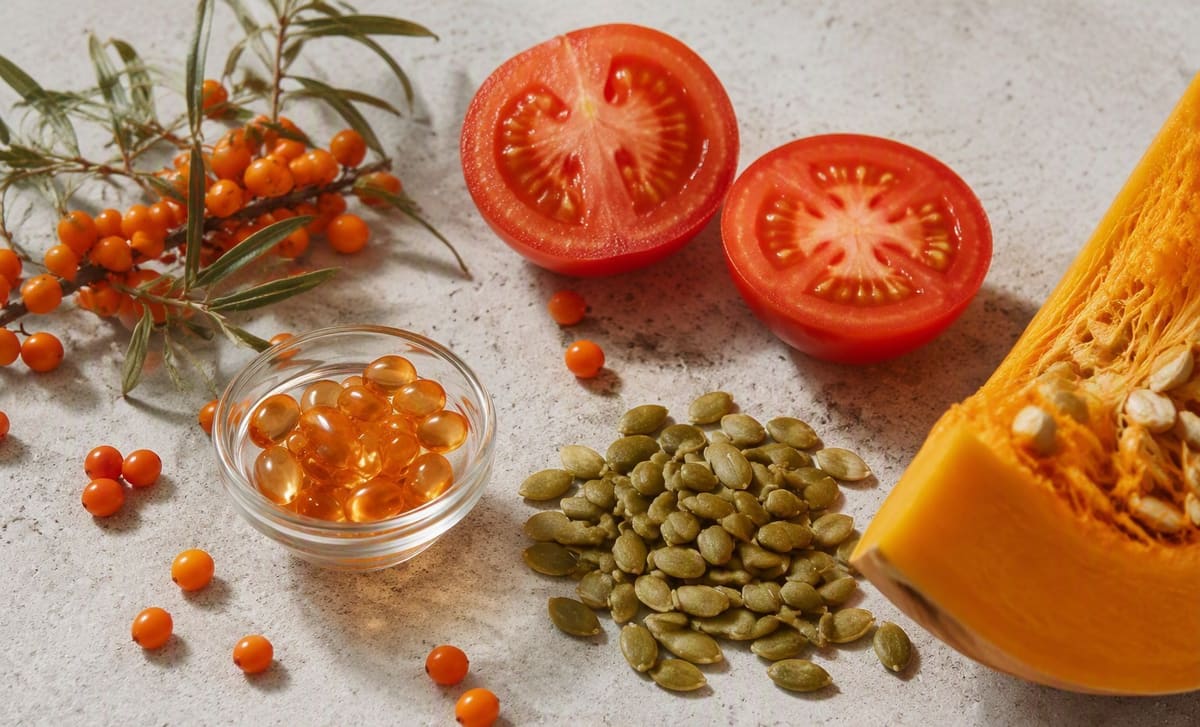
Sea buckthorn has never been studied for the prostate: no trials on enlargement, symptoms, or cancer risk. Products claiming otherwise are inventing a benefit from a nutrient list. The tools with real evidence are screening and urology, and they work.
Zero trials, flagged plainly
Search the human trial record for sea buckthorn and prostate and you get nothing. Not a small trial, not a pilot, nothing. Any page presenting the oil as prostate support has skipped the step where evidence exists. We grade that as unstudied, and on this site unstudied means we do not recommend it for that use. The men’s hub maps the rest of the male-claim family.
Decoding urinary symptoms
The usual prostate story arrives slowly. A weaker or slower stream than five years ago. Hesitating before it starts. Dribbling at the end. Two or three trips a night instead of none. A bladder that never quite feels empty. That pattern is benign prostatic hyperplasia, an enlargement that most men collect with age, and it is a plumbing inconvenience far more often than it is dangerous. It is also very treatable, which is the part the supplement aisle hopes you never learn.
Red flags that skip the line
Four patterns do not wait for a routine appointment. Being unable to urinate at all is an emergency, full stop. Visible blood in urine or semen needs prompt review. Fever with pelvic or lower back pain suggests infection that needs treatment now. And unexplained weight loss or deep, persistent bone pain alongside urinary change jumps the queue entirely. None of these is a supplement question. All of them are this-week medicine.
PSA, explained plainly
PSA is a blood test measuring a protein the prostate makes, and a high reading does not mean cancer: enlargement and infection raise it too, which is why the test starts a conversation rather than ends one. Most guidelines put the shared decision around age 50 for average-risk men, earlier with a family history of prostate cancer or African ancestry. The right move is asking your doctor where you fit, once, and then following the schedule you agree on. That is the entire “prostate protocol” with evidence behind it.
The usual prostate supplements are thin too
Context matters here. Saw palmetto and lycopene are the genre’s veterans, and their human evidence is mixed at best after decades of study. Sea buckthorn joins that shelf with even less behind it. If the famous names cannot show consistent benefit, the new arrival with zero trials deserves extra skepticism, not enthusiasm.
The supplement shelf, graded
Worth seeing the whole shelf at once. Saw palmetto: studied for decades, results mixed, larger trials underwhelming. Beta-sitosterol: some symptom data, small trials. Pygeum: thin. Pumpkin seed oil: thinner. Sea buckthorn: zero prostate trials of any kind. The pattern across the shelf is that even the best-studied names cannot show consistent wins, and the clinical trials page shows what measured evidence looks like when it exists. A shelf where the veterans fail is not a shelf to bet on.
What actually works
PSA screening and honest symptom evaluation. Urinary changes in men over 50 are common, usually benign, and occasionally not, and the only way to sort that is measurement. A urologist can offer proven options for bothersome symptoms, from medication to procedures, none of which come in a softgel. Daily habits matter here too: evening fluids, caffeine, and alcohol all nudge urinary symptoms, and a urologist will ask about them. Those habits are the cheapest lever in this whole file.
The watchful waiting option
One finding surprises men: for mild symptoms, urologists often recommend no treatment at all, just monitoring. A symptom score tracked over time tells you and your doctor whether things are stable, improving, or worth acting on, and treatment is chosen when the bother justifies it, not when a scan looks dramatic. This is the opposite of the supplement pitch, which sells action for its own sake. Measured inaction, with a professional watching, is a legitimate plan, and it is free.
Habits that nudge symptoms
While you wait for the appointment, a few adjustments have real evidence. Cutting fluids in the two hours before bed reduces night trips. Caffeine and alcohol both irritate the bladder, and trimming them shows results within weeks. Decongestants and some antihistamines tighten the very muscles that need to relax, so check the cold medicine. Double voiding, urinating, waiting a moment, and going again, empties more completely. None of this shrinks a prostate. All of it shrinks the annoyance, for free, starting tonight.
Where sea buckthorn can sit
As a nutritious food or a lipid-focused supplement discussed with your doctor, per the evidence on the heart hub, with the food side covered on the nutrition hub. Not as prostate insurance. If urinary symptoms are why you are here, skip the supplement research and book the appointment. The safety hub covers who should check with a doctor before supplementing for any reason.
Frequently asked questions
Is sea buckthorn good for the prostate?
Nobody knows, because it has never been studied for the prostate. The supplements usually marketed for prostate (saw palmetto, lycopene) have thin evidence themselves. What has real evidence: PSA screening and urology evaluation for urinary symptoms. Invented prostate claims are a red flag on any product page.
What prostate symptoms need a doctor fast?
Four patterns skip the waiting room debate: being unable to urinate at all, visible blood in urine or semen, fever with pelvic or back pain, and new severe pain. Those are urgent. The slow version, a weaker stream, more night trips, a bladder that never feels empty, deserves a routine appointment rather than an emergency visit, and a supplement is the wrong tool for both.