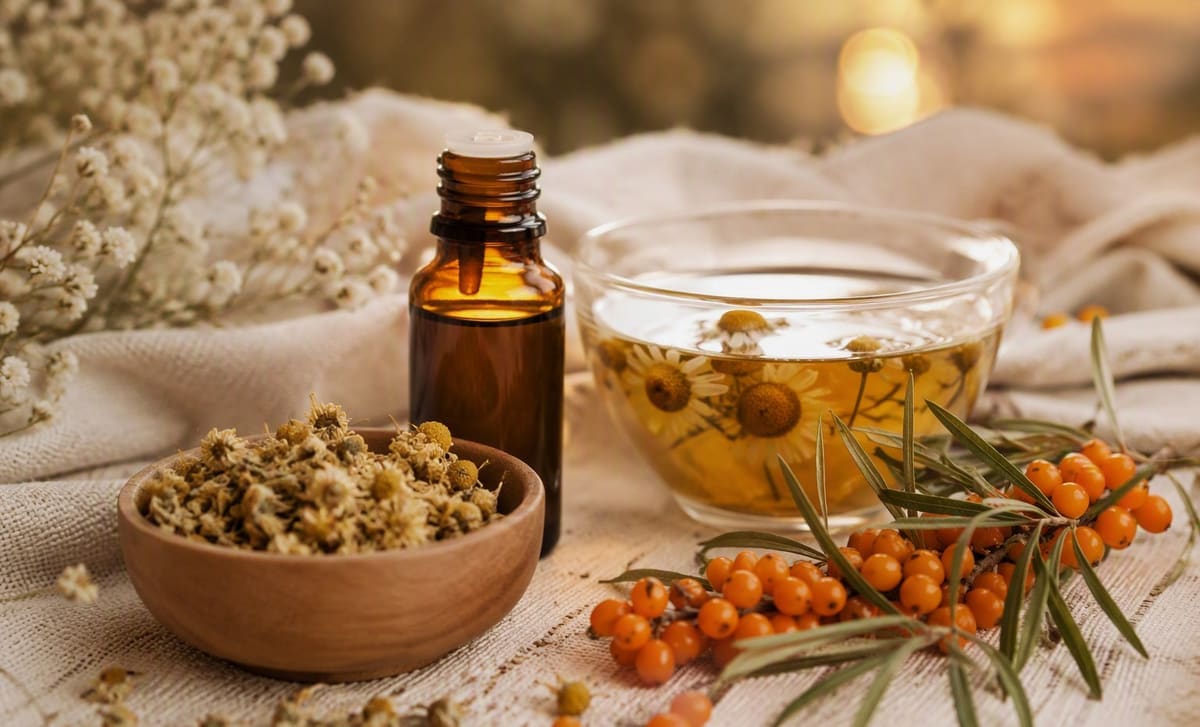
One menopause symptom has real sea buckthorn data: vaginal dryness. A randomized, placebo-controlled trial found 3 grams of oil daily for three months improved it in postmenopausal women. Hot flashes, mood, and sleep have no trial support at all. Skin hydration is a legitimate secondary benefit with its own evidence.
The trial that anchors this page
Published in Maturitas in 2014, the study randomized postmenopausal women to 3 grams of sea buckthorn oil daily or placebo for three months. The sea buckthorn group reported improved vaginal dryness symptoms versus placebo, with measurements of vaginal health backing the subjective reports.
Two honest caveats. It is a single trial, and 3 grams a day is a real commitment (roughly six 500 mg softgels). Promising is the right word. Proven is not, yet. That gap between promising and proven is the reason our women’s health pages grade each claim separately instead of selling one verdict for the whole life stage.
What the numbers showed: after three months, women on the oil had about three times the odds of improved vaginal epithelial integrity (odds ratio 3.1, 95% CI 1.11 to 8.95, 116 women). In the stricter analysis of women who took every dose as directed, the same effect lost significance (odds ratio 2.9, 95% CI 0.99 to 8.35), which is worth knowing before you count on it. Vaginal pH and the maturation index did not move, which tells you the oil is not acting like estrogen. That makes it a non hormonal support option. Modest next to topical estrogen, but relevant for women who avoid hormones.
The 2025 suppository trial, and why the route matters
A larger 2025 trial added to the vaginal picture, but for a different product than this page’s oral capsules, and it measured how readable a cervical exam was rather than how dry anyone felt. Researchers randomized 377 postmenopausal women before a colposcopy, 368 of whom finished, and compared no pretreatment, a vaginal sea buckthorn suppository, and an estrogen ointment over two weeks. Both treatments made the exam far easier to read than no treatment, and the two of them did not differ significantly from each other. The authors call the suppository not inferior to estrogen, though the trial set no non-inferiority margin, so no difference detected is the accurate reading. The suppository arm reported none of the estrogen group’s breast discomfort or headache, and local vaginal discomfort showed up in both arms. Read it for exactly what it is. That was a local product placed in the vagina, not oral oil, and a compound formula rather than pure sea buckthorn, so it does not upgrade the case for swallowing capsules. The vaginal dryness page walks through both trials and keeps the two routes apart.
What was not tested
Hot flashes, night sweats, mood changes, sleep: no human trial has tested sea buckthorn against any of them. Pages claiming otherwise are extrapolating from nutrients to outcomes without stopping at evidence along the way.
The menopause symptom map
Menopause is not one symptom. It is a cluster, and the evidence grades differently for each member. Hot flashes and night sweats: no sea buckthorn trial has ever measured them. Sleep and mood changes: same, zero data. Vaginal and urinary comfort: the oral trial this page is built on, walked through in full on the vaginal dryness page. Skin hydration and elasticity: two trials, both in women, detailed on the skin pages. Weight and blood pressure: a 15-trial meta-analysis found no effect on either, so that door is closed rather than merely unopened. One symptom map, one tested symptom. That is the honest shape of it, and any page promising relief across the whole map is drawing its own.
What has real evidence for the rest
For hot flashes and night sweats, hormone therapy remains the most effective option studied, and whether it fits you is a real conversation for your doctor, shaped by your age, your history, and your preferences. Non-hormonal prescriptions exist for women who cannot or do not want hormones. Movement, steady sleep habits, and limiting alcohol and caffeine all carry human data for sleep and mood in this life stage. None of that is exotic, and all of it out-evidences any berry for those symptoms. Evening primrose oil is the classic non-hormonal oil women reach for here, though reviews of its menopause trials found little consistent benefit, a contrast the sea buckthorn versus evening primrose oil page lays out side by side. The clinical trials page shows what sea buckthorn trials actually measured, so you can see the boundary for yourself.
The skin connection
Collagen and hydration decline with estrogen, which is why the two skin trials matter here. Both enrolled women, and the 2024 trial enrolled women of menopausal age specifically, finding improved hydration and collagen density at 1 gram daily. Details live on the dry skin page.
The honest stack
Put together, a reasonable sea buckthorn position for menopause looks like this. Berries and juice as food, freely. The studied 3 grams of oil daily for three months if vaginal dryness is your issue, discussed with your doctor. The skin lane for hydration, where the wrinkles page grades what the oil did for elasticity in women past 50. And a doctor’s appointment for everything vasomotor, because that is where the effective options live. Four lanes, each honest about its speed limit.
One red flag to never self-treat
One symptom breaks the supplement frame entirely: bleeding after menopause. Not spotting that a doctor has already explained, but new bleeding a year or more after your last period. That is not a dryness problem, not a hormone-balance problem, and not a wait-and-see problem. It is a this-week appointment, because the causes range from trivial to serious and only an examination sorts them. No oil enters that decision.
Questions worth bringing to your doctor
If menopause symptoms are disrupting your life, a short list sharpens the appointment. Is my dryness severe enough that topical estrogen makes sense, and does my history allow it? Are non-hormonal prescriptions an option for the flashes? Where does an oil like this one fit alongside a vaginal moisturizer, if at all? And what would you watch for in my case? A clinician who knows your history answers these in minutes, and the answers shape a plan no product page can.
The practical version
If vaginal dryness is the issue, the studied route is 3 grams daily for three months, discussed with your doctor, especially if you take any medication covered in the safety hub. Product math for that dose is in the capsules guide, and the dosage page shows the numbers side by side with the other trials.
Frequently asked questions
Does sea buckthorn help with menopause symptoms?
For vaginal dryness, one randomized placebo-controlled trial found 3 grams of sea buckthorn oil daily for three months improved symptoms in postmenopausal women. For hot flashes, mood, or sleep, no trials exist. Skin hydration evidence (from trials run mostly in women) is a secondary, moderate-strength plus.
Is sea buckthorn an alternative to HRT?
No. Hormone replacement therapy addresses the full menopause picture, including hot flashes, night sweats, and bone protection, and sea buckthorn has never been tested against any of those. Its one oral trial covered vaginal dryness only, with a modest effect, and the separate 2025 trial that went head to head with estrogen used a vaginal suppository rather than capsules. For women who cannot or do not want hormones, it is a non-estrogenic support option for that one symptom, not a substitute for the HRT conversation with your doctor.